

-
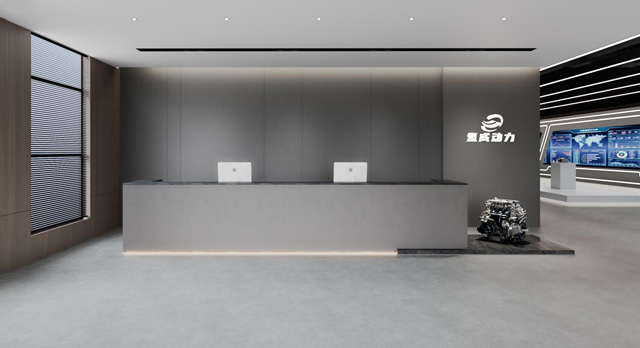
AboutQingcheng Power Technology(Luoyang) Co.,Ltd. is jointly established by Luoyang New Energy Investment and Development Group Co., Ltd., Haizhuo Power (Qingdao) Energy Technology Co., Ltd., Chengdu Yiyi New Energy Automobile Co., Ltd., and Nanjing Hydrogen Maple Technology Partnership (Limited Partnership).
-
ProductsThe company mainly focuses on two major sectors: fuel cell systems, power cells, and energy storage batteries, and is committed to providing leading solutions for hydrogen fuel cell systems and power cell energy storage syste

-
NewsBy giving full play to the advantages of each shareholder to lay the foundation for the sustainable development of the project company, we will develop new product types with more enthusiasm and strong internal management, improve the performance indicators of existing products, and truly let you rest assured.

-
TechnicalThe company's core team has more than 20 years of experience in the field of new energy. It has deep technical reserves in the development of fuel cell systems, engineering services and power storage battery research and development. 1 2 N business system.


News
Committed to providing hydrogen fuel cell systems and power battery energy storage system application solutions
Energy Storage News: Tracking Industry Hotspots!
Release time:
2026-01-12
Source:
On December 31, 2025, the National Development and Reform Commission and the National Energy Administration issued Guiding Opinions on Promoting High-Quality Development of the Power Grid. The Opinions set forth specific targets: By 2030, a new-type power grid platform—featuring a robust backbone grid and distribution network as key foundations, complemented by intelligent microgrids—will be preliminarily established. The capacity for optimal allocation of grid resources will be significantly enhanced; the scale of “power transmission from west to east” will exceed 420 million kilowatts, with newly added inter-provincial power mutual assistance capacity reaching approximately 40 million kilowatts. The proportion of power generated from new energy sources will reach around 30%, and the capacity to accommodate distributed new energy will reach 900 million kilowatts, supporting over 40 million charging infrastructure units. By 2035, the development of the backbone grid, distribution network, and intelligent microgrids will be fully coordinated, and the safety governance mechanisms across all levels of the grid will be further refined. The level of intelligence and digitalization throughout the entire lifecycle of grid facilities will be markedly improved, effectively supporting the safe and stable operation of the new power system and the healthy development of various grid-connected entities, thereby contributing to the achievement of the country’s nationally determined contribution targets. The Opinions emphasize supporting the construction of distributed independent energy storage systems and grid-replacement energy storage systems, thereby enhancing the interaction between distribution networks and various emerging grid-connected power models. The Opinions also call for improving the intelligent control capabilities and operational compatibility of all elements within smart microgrids—namely, generation, grid, load, and storage—and gradually increasing the proportion of self-generated and self-consumed new energy. Furthermore, they encourage actively promoting the development of regulatory capabilities for new grid-connected entities such as distributed new energy and advanced energy storage systems, enabling synergistic optimization and dispatch of diverse and massive resources. The Opinions stress strengthening the personnel and support systems at city (prefecture) and county (distribution) dispatch levels. They also call for refining the regulatory rules governing transmission and distribution tariffs. To meet the needs of building a new power system, the Opinions suggest exploring two-part tariff structures or single-capacity tariffs for projects primarily focused on transmitting clean energy or providing grid connection services. For emerging business models such as local consumption of new energy, single-capacity tariffs will be implemented. Additionally, the Opinions propose studying and establishing a mechanism for settling permitted revenues of grid enterprises, perfecting methods for monitoring and auditing transmission and distribution costs, and solidifying the foundation for pricing.

National Policies and Top News
01 The National Development and Reform Commission and the National Energy Administration have issued guiding opinions on promoting high-quality development of the power grid.
On December 31, 2025, the National Development and Reform Commission and the National Energy Administration issued guiding opinions on promoting high-quality development of the power grid.
The proposal sets forth specific goals: By 2030, a new-type power grid platform—featuring a robust backbone grid and distribution network as the core infrastructure, complemented by intelligent microgrids—will be preliminarily established. The capacity for optimal allocation of grid resources will be significantly enhanced; the scale of “power transmission from west to east” will exceed 420 million kilowatts, and the newly added inter-provincial power-sharing capacity will reach approximately 40 million kilowatts. This will support a share of around 30% for renewable energy generation, enable the integration of distributed renewable energy sources up to 900 million kilowatts, and facilitate the deployment of over 40 million charging infrastructure units. By 2035, the development of the backbone grid, distribution network, and intelligent microgrids will achieve full synergy. The safety governance mechanisms across all levels of the grid will be further refined and perfected. The level of intelligence and digitalization throughout the entire lifecycle of grid facilities will be markedly improved, effectively supporting the safe and stable operation of the new power system and the healthy development of various grid-connected entities, thereby contributing to the achievement of the country’s nationally determined contributions.
The opinion points out the need to support the development of distributed, stand-alone energy storage systems and grid-replacement energy storage systems, thereby enhancing the interaction between distribution networks and various new types of grid-connected power generation. It also calls for improving the intelligent control capabilities and operational compatibility of all components—generation, grid, load, and storage—within smart microgrids, and gradually increasing the proportion of self-generated and self-consumed renewable energy.
Actively promote the development of regulatory capabilities for new grid-connected entities such as distributed new energy sources and advanced energy storage systems, thereby achieving coordinated and optimized dispatching of diverse and massive resources. Strengthen the personnel and support systems for city (prefecture)-level and county (distribution)-level dispatchers.
Improve the regulatory rules for transmission and distribution tariffs. To meet the needs of building a new-type power system, explore the implementation of a two-part tariff or a single-capacity tariff for projects primarily focused on transmitting clean energy or providing grid interconnection functions. For emerging business models such as local consumption of new energy sources, adopt a single-capacity tariff. Study and establish a mechanism for settling permitted revenues of grid enterprises. Further refine the methods for monitoring and auditing transmission and distribution costs to solidify the foundation for pricing.
02 The Ministry of Housing and Urban-Rural Development has released the national standard GB/T 51048-2025, "Design Standard for Electrochemical Energy Storage Power Stations."
On December 31, 2025, the Ministry of Housing and Urban-Rural Development released the national standard GB/T 51048-2025, "Design Standard for Electrochemical Energy Storage Power Stations." This standard applies to the design of stationary electrochemical energy storage power stations—whether newly built, expanded, or renovated—that have a rated power of 500 kW or more and a rated energy capacity of 500 kWh or more, and which use lithium-ion batteries, sodium-ion batteries, flow batteries, lead-acid/lead-carbon batteries, or hydrogen production via water electrolysis/fuel cells as their energy storage media.
The rated installed capacity of an electrochemical energy storage power station shall be determined through technical and economic comparisons, taking into account the requirements of various application scenarios—including peak-shaving and frequency regulation in the power system, emergency power support, voltage control, tracking planned power curves, smoothing power output, and backup power supply—while also considering site-specific construction conditions and grid connection requirements.
Small electrochemical energy storage power stations should adopt voltage levels of 0.4 kV to 35 kV and below.
Medium-sized electrochemical energy storage power stations should adopt voltage levels ranging from 10 kV to 110 kV.
Large-scale electrochemical energy storage power stations should adopt voltage levels of 110 kV and above.
The power factor at the grid connection point of an electrochemical energy storage power station shall be continuously adjustable within the range of 0.9 (leading) to 0.9 (lagging).
Prefabricated cabins for outdoor-mounted lithium-ion batteries, sodium-ion batteries, and lead-acid/lead-carbon batteries should be arranged in a single layer. If there are genuine difficulties in doing so, they may be arranged in two layers. When arranged in two layers, each battery prefabricated cabin on the upper level must be equipped with an independent support structure.
The buildings for lithium-ion battery energy storage power stations and sodium-ion battery energy storage power stations shall be independently constructed and shall not be located underground or in semi-underground spaces. Prefabricated modules for lithium-ion and sodium-ion batteries shall not be installed underground, in semi-underground spaces, or on rooftops. The design of rooftop energy storage systems shall be determined through a technical and economic comparison, taking into account application requirements, construction conditions, grid connection voltage levels, types of energy storage batteries, rated power, rated energy, system efficiency, and the designed service life of the batteries.
The grid-connected voltage for energy storage converters should preferably adopt standard AC or DC voltages. When an energy storage converter is connected to the grid via AC, the rated AC connection voltage of the energy storage unit can be selected according to Table 7.4.1. When the energy storage converter is connected to the grid via DC, the rated voltages should preferably be 220V (110V), 750V (375V), or 1500V (750V).
The main technical revisions to this standard include the removal of design requirements for sodium-sulfur battery energy storage power stations and the addition of design requirements for sodium-ion battery and electrolysis-based hydrogen production/fuel cell energy storage power stations. The standard also revises the requirements for battery selection and battery pack assembly, adds requirements for DC-side switching equipment configuration, and modifies the technical requirements for battery management systems and energy storage converters. Furthermore, it introduces new requirements for the adjacent placement and two-level arrangement of prefabricated cabins housing lithium-ion and sodium-ion batteries, and revises the height and spacing requirements for indoor battery cabinets and racks. The standard further revises the fire hazard classification and fire resistance rating for lead-acid/lead-carbon batteries and flow batteries, and modifies the fire protection design requirements for lithium-ion batteries. Additionally, it revises specific fire protection design requirements for the overall layout, floor plans, safety evacuation, fire water supply and extinguishing systems, smoke and heat control, and automatic fire alarm systems of lead-acid/lead-carbon battery, flow battery, and lithium-ion battery energy storage power stations. Finally, it adds requirements for fire-fighting power supply, emergency lighting, safety exit indicator lights, and fire emergency lighting fixtures.
03 Notice Issued by the General Office of the National Development and Reform Commission, the General Office of the Ministry of Industry and Information Technology, and the Comprehensive Department of the National Energy Administration on the Publication of the List of National-Level Zero-Carbon Industrial Parks (First Batch)
On December 26, the General Office of the National Development and Reform Commission, the General Office of the Ministry of Industry and Information Technology, and the Comprehensive Department of the National Energy Administration jointly issued a notice announcing the "List of National-Level Zero-Carbon Industrial Parks (First Batch)." The list identifies a total of 52 parks as part of the first batch of national-level zero-carbon industrial parks. The scope includes both park within parks and entire parks, with construction deadlines set for completion in 2027, 2028, 2029, and 2030. At a press conference held by the CPC Central Committee in October 2025, Zheng Zhaojie, Director of the National Development and Reform Commission, announced that during the 15th Five-Year Plan period, the country aims to establish approximately 100 national-level zero-carbon industrial parks. The notice emphasizes that development and reform commissions, departments of industry and information technology, and energy administrations in various regions should actively support the construction of national-level zero-carbon industrial parks in their respective areas, providing necessary support in terms of funding arrangements, resource guarantees, technical assistance, and financial services. It also calls for promoting the implementation of green power direct supply models—such as direct connection of green electricity and nearby access of new energy sources to incremental distribution networks—in these national-level zero-carbon industrial parks. Furthermore, the notice encourages and supports relevant parks to carry out innovation in technology, policies, and business models tailored to local conditions.
Local Policies and Top News
01 The Shandong Energy Regulatory Office has released the “Implementation Rules for Grid Connection and Operation Management of Electric Power in Shandong Province” and the “Implementation Rules for Management of Ancillary Services for Electric Power in Shandong Province.”
On January 6, 2026, the Shandong Energy Regulatory Authority released a revised draft of the “Two Detailed Rules.” In this revision, the requirements for grid-connected safety assessments related to wind, solar, and energy storage have been strengthened. Additionally, assessment criteria for grid-connected performance—including fault ride-through capability of wind power, photovoltaic systems, and new energy storage technologies, as well as voltage and frequency operation adaptability—have been supplemented and adjusted. New assessment provisions for distributed photovoltaic systems and virtual power plants have been introduced. Furthermore, to address the risk of power oscillations caused by excessive power regulation from power sources, a new assessment clause has been added specifically targeting over-regulation in primary frequency modulation by grid-connected entities.
In addition, the document also clarifies compensation standards for inertia response and rapid voltage regulation, which means that grid-forming energy storage systems will be able to reap tangible value returns! However, primary frequency regulation services provided by wind farms, photovoltaic power plants, and standalone new-type energy storage stations will no longer be included within the scope of compensated ancillary services. As for fixed-compensation ancillary services such as AVC, the allocation mechanism has been adjusted from being borne by specific entities to being shared among all grid-connected entities.
Key points of Annex 1, “Implementation Details for Grid Connection and Operation Management of Electric Power in Shandong Province,” are as follows: Energy storage systems on the power supply side and user side that meet the relevant conditions may be operated independently and participate in grid connection operation assessments as stand-alone new energy storage power stations (while also participating in ancillary service compensation). Compared with previous versions, the 2026 version introduces new requirements regarding capacity: During the commissioning period, stand-alone new energy storage power stations that do not have independent metering, control, or other such functions shall limit their charge and discharge power to no more than 40% of the expanded-capacity installed capacity of the station. Similarly, new requirements have been added for wind and solar power plants: Wind farms and photovoltaic power plants that lack independent metering, control, and forecasting capabilities shall limit their output to no more than 40% of the expanded-capacity installed capacity of the newly expanded renewable energy plant.
The document clearly states that generating units of publicly-owned power plants directly dispatched by the provincial dispatch center shall be equipped with primary frequency regulation capability. Wind farms and photovoltaic power stations (including those with integrated energy storage, the same applies hereinafter) shall possess active power regulation capabilities, must be equipped with AGC systems, shall be fitted with dynamic reactive power compensation devices, and shall have automatic voltage regulation functionality. Among these dynamic reactive power compensation devices, the main types include MCR-type, TCR-type SVCs, and SVGs.
Among the primary frequency regulation performance requirements for photovoltaic power plants and wind farms, new energy stations equipped with energy storage systems shall regard the installed energy storage as an integral part of the new energy station. The station’s total generation capacity shall be the sum of the collector line power within the station and the power output of the installed energy storage system.
Operation and Management of Independent New Energy Storage Power Stations
The document clearly states: Independent new energy storage power stations shall be equipped with functions such as AGC and primary frequency regulation. Within one month of connecting to the grid, these storage power stations will be exempt from assessment and reimbursement related to generation plans, AGC, and AVC. If the AGC function is not put into operation on schedule, 1% of the monthly online power generation volume will be subject to assessment. The operational rate of AVC shall meet or exceed 98% to be considered compliant; the compliance rate for AVC regulation shall reach or surpass 96%. The cumulative assessed power volume for the month shall not exceed 2% of the monthly online power generation volume. An AVC reactive power output exceeding 90% of the station’s maximum inductive reactive power capacity shall be deemed compliant, and will be assessed at a rate of 0.01% of the monthly online power generation volume, with the maximum assessed power volume not exceeding 0.1% of the monthly online power generation volume.
Independent New Energy Storage Power Station Technical Management
An independent, new-type energy storage power station shall meet the four-quadrant power control capabilities stipulated by relevant national and industry standards. An independent, new-type energy storage power station shall simultaneously possess both local and remote charge/discharge power control as well as frequency and voltage regulation functions.
The fault ride-through capability and voltage and frequency operation adaptability of independent new energy storage power stations shall comply with the relevant provisions of national and industry standards. Independent new energy storage power stations shall be equipped with rapid voltage regulation capabilities. For the assessment of the station’s rapid voltage regulation function, the cumulative assessed electricity consumption per month shall not exceed 2% of the station’s monthly grid-connected electricity generation. When the voltage at the connection point of the power station falls within the range of 90% to 97% or 107% to 110% of the nominal voltage, the power station shall provide a rapid voltage regulation response, adjusting the voltage at the connection point to within the range of 97% to 107% within one second, or exhausting its full voltage regulation capacity.
Key points of Annex 2, “Implementation Rules for the Management of Power Ancillary Services in Shandong Province,” are as follows:
Compensation for AGC and paid peak-shaving shall be implemented in accordance with the trading results of the ancillary services market for electricity. Compensation for paid reactive power, AVC, black start, rotational inertia, and fast voltage regulation shall be implemented in accordance with these detailed rules.
Compensation for Paid Reactive Power Ancillary Services: The reactive power generated by a generating unit exceeding a lagging power factor of 0.8 or the reactive power absorbed by a generating unit exceeding a leading power factor of 0.97 will be compensated at a rate of 30 yuan per megavar-hour.
AVC Ancillary Service Compensation: If the AVC operation rate reaches 98% or higher and the AVC regulation compliance rate reaches 98% or higher, compensation will be provided based on the unit (station) capacity and operating time. The compensation standard is 0.1 yuan per megawatt-hour.
Compensation for Black Start Support Services: For black start trials, compensation will be provided at 300,000 yuan per trial. For actual black start services provided in response to power grid failures, compensation will be 10 million yuan per service.
Compensation for Inertia Response Ancillary Services Provided by Wind Farms, Photovoltaic Power Plants, and Standalone New Energy Storage Power Plants: When the maximum frequency deviation of the power grid does not exceed 0.06 Hz, it is considered a small disturbance, and the compensation rate is 72 yuan per megawatt; when the maximum frequency deviation of the power grid exceeds 0.06 Hz, it is considered a large disturbance, and the compensation rate is 100 yuan per megawatt. Compensation for Rapid Voltage Regulation Ancillary Services Provided by Wind Farms, Photovoltaic Power Plants, and Standalone New Energy Storage Power Plants: The compensation rate is 72 yuan per megawatt.
02 The Hubei Provincial Development and Reform Commission and the Hubei Provincial Energy Administration issued the “Notice on Establishing a New Pricing Mechanism for New Energy Storage.”
On January 4, 2026, the Hubei Provincial Development and Reform Commission and the Hubei Provincial Energy Administration issued the "Notice on Establishing a New Pricing Mechanism for New Energy Storage." This notice will take effect on February 1, 2026, with an initial implementation period of one year. The notice clarifies the pricing mechanism for charging and discharging new energy storage systems. For independent energy storage systems on the grid side, a capacity compensation mechanism will be established. A list of grid-side independent energy storage projects included in the scope of capacity compensation will be published periodically. Projects eligible for capacity compensation shall not lease capacity.
The monthly capacity electricity charge is determined based on the monthly capacity tariff and the monthly average available capacity. Specifically, the monthly capacity tariff equals the annual capacity tariff divided by 12; the annual capacity tariff is temporarily set at 165 yuan per kilowatt-year. The capacity electricity charge is included in the system operation costs and is shared among all industrial and commercial users, with monthly rolling settlements.
The power dispatching agency shall, on a monthly basis, verify the actual adjustable capacity of relevant projects and compile statistics on performance assessments. These assessments will be made in accordance with the relevant assessment rules for coal-fired power capacity pricing and will serve as the basis for settling capacity electricity charges.
If the actual maximum discharge power or the single-discharge capacity of a project fails to reach 98% of the previously reported value and also fails to reach 98% of the planned value, one instance of non-compliance will result in one assessment. If such non-compliance occurs twice within a month, 10% of that month’s capacity electricity fee will be deducted; if it occurs three times, 50% will be deducted; and if it occurs four or more times, 100% will be deducted. For projects whose monthly capacity electricity fees are fully deducted cumulatively three times within a calendar year, their eligibility for capacity compensation will be revoked.
If the project’s annual equivalent charge-discharge cycles are relatively low (electrochemical energy storage below 240 cycles, compressed air energy storage below 180 cycles), 20% of that year’s capacity electricity charges will be recovered and used to offset system operating costs.
New-type energy storage on the grid side—energy storage systems that are directly connected to the public power grid, meet independent metering requirements, and are subject to unified dispatch by the power dispatching agency (including stand-alone energy storage systems and energy storage facilities co-located outside new-energy power stations)—shall participate in the spot market in accordance with established rules. The charging and discharging prices shall be determined by market forces. For electricity charged into the grid, the grid-connected transmission losses, transmission and distribution tariffs, and system operation fees shall be paid.
New energy storage on the power supply side shall participate in the spot market according to the relevant rules and be subject to the same generation and consumption pricing policies as the associated new energy generation stations, with overall electricity charges settled accordingly. During periods when they do not participate in the market, they shall be charged the low-valley electricity rates applicable to two-part tariff users at the same voltage level.
03 The General Office of the People's Government of Shanxi Province has issued the “List of Key Provincial Projects for 2026.”
On January 4, the General Office of the People's Government of Shanxi Province issued the “List of Key Provincial Engineering Projects for 2026.”
The list covers a total of 629 major engineering projects, including 174 projects related to energy transition, which encompass wind and solar power generation, advanced coal-fired power, flexible energy storage and regulation, green-power industrial parks, modern coal chemical industry, advanced energy equipment, and integrated energy solutions. Among these, projects focused on flexible energy storage and regulation account for the largest share, totaling 38 projects.
The 38 flexible energy storage and regulation projects cover categories such as pumped hydro storage, new types of energy storage, battery swap stations, and ultra-high-voltage transmission. Among these, the new-type energy storage projects are mainly located in cities including Datong, Xinzhou, Jinzhong, Yangquan, Changzhi, Jincheng, Linfen, Yuncheng, and Lüliang.
The Beijing Municipal Development and Reform Commission, the Beijing Municipal Bureau of Economy and Information Technology, the Beijing Municipal Science and Technology Commission, and the Zhongguancun Administrative Committee have issued the "Several Measures for Further Enhancing the City's Pilot-Test Service Capabilities and Promoting the Integrated Development of Scientific and Technological Innovation and Industrial Innovation."
On January 4, 2026, the Beijing Municipal Development and Reform Commission, the Beijing Municipal Bureau of Economy and Information Technology, the Beijing Municipal Science and Technology Commission, and the Zhongguancun Administrative Committee jointly issued the "Several Measures for Further Enhancing the City's Pilot-Test Service Capabilities and Promoting the Integrated Development of Scientific and Technological Innovation and Industrial Innovation." The document states that Beijing will provide tiered support for the construction of a number of pilot-test platforms, with newly established pilot-test platforms eligible for subsidies of up to 100 million yuan.
The “Several Measures” state that by 2030, efforts will be made to establish 10 national-level manufacturing pilot-scale platforms in Beijing and support the construction of 50 municipal-level pilot-scale platforms, thereby initially forming a pilot-scale system that meets the requirements of building the capital’s modern industrial system and fostering the development of new-quality productive forces.
Pilot testing is a transitional trial that bridges the gap between newly developed products in the prototyping stage and their integration into the production process; it represents a critical step in the commercialization of scientific and technological achievements. Beijing has leveraged its mechanism for the integrated development of scientific and technological innovation and industry, introducing 14 policy measures to ensure that pilot-testing platforms can not only be established but also operate efficiently.
The “Several Measures” provide tiered support for the construction of a batch of pilot-scale testing platforms: For internationally leading industries such as artificial intelligence, pharmaceuticals and healthcare, green and low-carbon technologies, robotics, and intelligent manufacturing; for industries that strengthen foundational capabilities and ensure security, including new materials, integrated circuits, aerospace technology, and new safety and emergency response technologies; and for emerging growth sectors of the future, a number of pilot-scale testing platforms will be established. Newly built projects will receive subsidies at a rate of 35% of the total investment, with a maximum subsidy amount of 100 million yuan. For industries undergoing upgrading—such as next-generation information technology and intelligent connected new-energy vehicles—a cluster of pilot-scale testing platforms will be developed, and newly built projects in these clusters will receive subsidies at a rate of 25% of the total investment, with a maximum subsidy amount of 50 million yuan.
05 Notice from the Yunnan Provincial Development and Reform Commission and the Yunnan Provincial Energy Administration on Issuing the Special Action Plan for High-Quality Development of New Energy Storage in Yunnan Province (2025–2027)
Recently, the Yunnan Provincial Development and Reform Commission and the Yunnan Provincial Energy Administration jointly issued the "Special Action Plan for High-Quality Development of New Energy Storage in Yunnan Province (2025–2027)." According to the document,
1. By 2027, the installed capacity of new energy storage in Yunnan Province will reach over 8 million kilowatts.
2. Based on the province’s installed capacity of new energy sources, their spatial distribution, development plans, and consumption trends, we will comprehensively consider four key dimensions: smoothing new energy power output, enhancing new energy utilization rates, improving system safety and stability, and optimizing the allocation of resources among generation, transmission, load, and storage. In particular, we will focus on deploying new energy facilities in critical grid nodes and regions with high concentrations of new energy sources that face significant challenges in transmitting and consuming such energy, while also promoting the deployment of new types of shared energy storage systems.
3. The list of grid-side independent energy storage projects eligible for capacity-based electricity pricing in 2025 has been released. Emphasis will be placed on developing new types of energy storage projects that promote the consumption of new energy sources and enhance the stability of the power system, thereby forming the “2025 Yunnan Province List of New Shared Energy Storage Projects,” comprising a total of 45 projects with a combined capacity of 8.955 million kilowatts/20.36 million kilowatt-hours. For the years 2026–2027, the study proposes the “Yunnan Province Development Scale and Layout Plan for New Shared Energy Storage (2026–2027).” Grid-side independent energy storage projects not included in the submitted list will not participate in the capacity adjustment market for capacity leasing, nor will they be eligible for supportive policies such as capacity-based electricity pricing or capacity compensation.
4. Focus on application scenarios such as industrial parks, zero-carbon parks, computing power facilities, big data centers, commercial complexes, integrated photovoltaic-storage-charging stations, distributed photovoltaics, communication base stations, the low-altitude economy, energy storage plus agriculture, and energy storage plus transportation. Actively innovate application models including direct green electricity connections, virtual power plants, smart microgrids, integrated source-grid-load-storage systems, and vehicle-to-grid interactions, thereby further enhancing the system’s regulatory capabilities.
5. Promote “new energy + energy storage” as the main entity for joint bidding and integrated participation in electricity market transactions. Encourage new energy storage projects that meet the technical requirements for independent metering and control, and can be connected to the dispatch automation system for grid monitoring and scheduling, to participate independently in the electricity market.
6. Optimize and improve the market mechanisms for new energy storage to participate in grid frequency regulation and black-start auxiliary services. Explore and study additional auxiliary service products such as ramp-up and rotational inertia, and gradually expand the scale of new energy storage’s participation in auxiliary services.
06 The Gansu Provincial Development and Reform Commission issued the “Notice on Establishing a Reliability Capacity Compensation Mechanism on the Generation Side (Trial)”
On December 31, 2025, the Gansu Provincial Development and Reform Commission issued the “Notice on Establishing a Reliability Capacity Compensation Mechanism on the Generation Side (Trial),” which explicitly states that units whose power supply is genuinely needed by the power system and capable of providing continuous and stable power during peak periods throughout the year will be compensated based on their reliable capacity. The compensation scope currently includes compliant, operating public coal-fired generating units and grid-side independent new energy storage systems, but excludes DC-linked power sources. The annual capacity electricity fee that each unit can receive is calculated as the product of its declared capacity, the reliable capacity compensation standard, and the capacity supply-demand coefficient. The reliable capacity compensation standard is tentatively set at 330 yuan per kilowatt per year (in accordance with Document No. 1501 [2024] of the National Development and Reform Commission’s Price Department), effective January 1, 2026. The capacity electricity fee will be allocated monthly according to the ratio of monthly outbound power transmission (excluding DC-linked power sources) to the total monthly electricity consumption of all industrial and commercial users within the province.
During the operation of new, independent energy storage systems on the grid side, if a system fails to provide the maximum output or discharge duration as scheduled in advance by the dispatch authority, a 50% deduction will be applied to the monthly capacity charge for the month in which the first violation occurs; a 100% deduction will be applied for the second violation. If three months within a year result in a 100% deduction from the monthly capacity charge, the annual capacity charge will also be fully deducted.
In addition, the document clearly stipulates that the lower limit for spot market bid prices will be set at 0.04 yuan/kWh, while the upper limit will be set at 0.5 yuan/kWh. The spot market pricing mechanism will take effect from January 1, 2026.
07 The Shaanxi Provincial Development and Reform Commission has released the "Implementation Rules for the Shaanxi Electricity Frequency Regulation Ancillary Services Market."
On December 29, the Shaanxi Provincial Development and Reform Commission released the "Implementation Rules for the Shaanxi Electricity Frequency Regulation Ancillary Services Market." The rules state that frequency regulation services refer to a service in which power generation units and new types of market participants use automatic power control technologies—including Automatic Generation Control (AGC)—to automatically respond to deviations in Area Control Error (ACE) via regional tie-line control. They adjust their active power output in real time at a specified regulation rate to meet ACE control requirements. The Shaanxi frequency regulation market adopts a single-price mechanism based on frequency regulation mileage, with payment made according to performance.
To prevent frequency modulation from causing significant changes in power flow distribution that could compromise system stability, the maximum bid-winning frequency regulation capacity of a single AGC unit connected to the grid shall not exceed the lesser of 15% of its installed capacity and 30% of its adjustable capacity range. For new types of market participants, the maximum bid-winning frequency regulation capacity of a single AGC unit shall not exceed 10% of the system’s total frequency regulation capacity requirement. The total bid-winning frequency regulation capacity of all new market participants across the entire grid shall not exceed 35% of the system’s total frequency regulation capacity requirement. The dispatching agency may adjust these proportions as necessary to ensure the safe operation of the power grid.
When the AGC units have the same ranking price, the AGC unit with the higher k-value will be cleared first. When both the ranking price and k-value of the AGC units are identical, they will be cleared proportionally according to their declared frequency regulation capacities.
Independent energy storage systems, virtual power plants, and other “generation-and-consumption integrated” entities shall participate in the allocation or sharing of ancillary service costs on the generation side (for power producers) or the user side (for electricity consumers) based on their monthly grid-connected (or grid-disconnected) electricity volumes. The allocated costs shall be settled monthly, and the ancillary service costs borne by users will be incorporated into the system operation costs and settled together with electricity bills.
At this stage, the frequency regulation market in Shaanxi operates separately from the electricity spot market; once conditions are met, the two markets will be integrated for joint clearing. Market participants submit bids using AGC units. If a single frequency regulation service provider owns multiple AGC units, it must submit separate bids for each unit. New energy power plants equipped with energy storage systems that are not subject to independent dispatch control may join forces with their respective new energy power plants and participate in bidding as a single AGC unit under the wind-storage or solar-storage model. Each AGC unit must declare both the frequency regulation mileage price and the frequency regulation capacity intended for bidding. The minimum unit for declaring the frequency regulation mileage price is 0.1 yuan/MW, and the initial price range is set at 0–15 yuan/MW. The minimum unit for declaring frequency regulation capacity is 0.01 MW.
08 The Zhejiang Provincial Development and Reform Commission issued the “Notice on Issuing the ‘Allocation Plan for Capacity Compensation Funds for New Energy Storage’.”
On December 26, 2025, the Zhejiang Provincial Development and Reform Commission issued the “Notice on Issuing the ‘Allocation Plan for New Energy Storage Capacity Compensation Funds.’” According to the list of new energy storage capacity compensation projects, a total of 17 projects have been approved for compensation, with a combined capacity of 582 MW/1.164 GWh. The total compensation amount for the first year is 232.8 million yuan.
Key words:
Previous Page:
Recommended News
Contact
Address: Chanhe Innovation Technology Park, No. 2 Zhenxing Road, Chanhe Hui District, Luoyang City, Henan Province
Tel:0379-63869669
Mailbox:info@hydromobility.cn
Scan

Copyright©2023 Qingcheng Power Technology(Luoyang) Co.,Ltd. This website supports ipv6
 豫公网安备41030402000254号
Copyright©2023 Qingcheng Power Technology(Luoyang) Co.,Ltd.
This website supports ipv6