

-
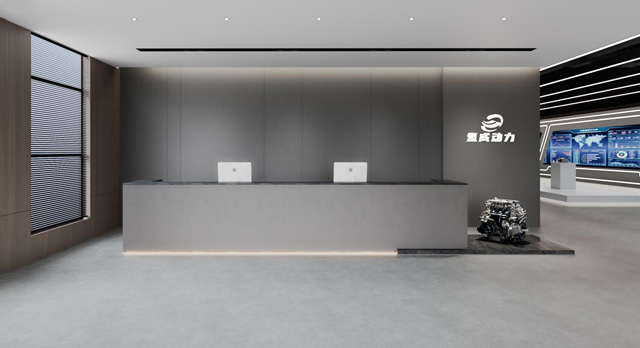
AboutQingcheng Power Technology(Luoyang) Co.,Ltd. is jointly established by Luoyang New Energy Investment and Development Group Co., Ltd., Haizhuo Power (Qingdao) Energy Technology Co., Ltd., Chengdu Yiyi New Energy Automobile Co., Ltd., and Nanjing Hydrogen Maple Technology Partnership (Limited Partnership).
-
ProductsThe company mainly focuses on two major sectors: fuel cell systems, power cells, and energy storage batteries, and is committed to providing leading solutions for hydrogen fuel cell systems and power cell energy storage syste

-
NewsBy giving full play to the advantages of each shareholder to lay the foundation for the sustainable development of the project company, we will develop new product types with more enthusiasm and strong internal management, improve the performance indicators of existing products, and truly let you rest assured.

-
TechnicalThe company's core team has more than 20 years of experience in the field of new energy. It has deep technical reserves in the development of fuel cell systems, engineering services and power storage battery research and development. 1 2 N business system.


News
Committed to providing hydrogen fuel cell systems and power battery energy storage system application solutions
Energy Storage News: Tracking Industry Hotspots!
Release time:
2026-01-19
Source:
On January 9, 2026, the Ministry of Industry and Information Technology and four other departments jointly issued the "Guidelines for the Construction and Application of Industrial Green Microgrids (2026–2030)." The document explicitly states: Strengthen cost-benefit analyses of industrial green microgrids, actively encourage social capital to participate in project construction, and continuously optimize investment structures and operational models. Actively explore diversified revenue channels such as ancillary services in the electricity market, green power trading, and electric energy trading, thereby shortening the investment payback period and preventing inefficient and redundant construction.

National Policies and Top News
On January 9, 2026, the Ministry of Industry and Information Technology and four other departments jointly issued the "Guidelines for the Construction and Application of Industrial Green Microgrids (2026–2030)." The document explicitly states: Strengthen cost-benefit analyses of industrial green microgrids, actively encourage social capital to participate in project construction, and continuously optimize investment structures and operational models. Actively explore diversified revenue channels such as ancillary services in the electricity market, green power trading, and electric energy trading, thereby shortening the investment payback period and preventing inefficient and redundant construction.
Regarding new energy storage technologies, the proposal suggests configuring single or multiple types of new energy storage systems based on factors such as system scale, renewable energy consumption capacity, frequency/voltage support requirements, and thermal/cold load regulation needs. Specifically, for renewable energy consumption needs, given typical daily load curves and the output characteristics of renewable energy sources, we can select from among lithium-ion batteries, flow batteries, hydrogen storage, compressed air systems, and other storage technologies to achieve peak-shaving and valley-filling of green electricity and enable cross-time-period utilization. For frequency/voltage support requirements, considering the magnitude of frequency fluctuations and the required duration of support, we can choose lithium-ion batteries, flywheel energy storage, supercapacitors, and other storage technologies to enhance the system’s active and reactive power regulation capabilities, thereby improving power quality and supply reliability. As for thermal/cold load regulation needs, based on the scale, fluctuation characteristics, and adjustment time requirements of thermal and cold loads, we can opt for molten-salt thermal storage or ice-based cold storage systems. Furthermore, we should promote innovative applications of sodium-ion batteries, vanadium-titanium batteries, lithium capacitors, and solar thermal energy storage in industrial green microgrids.
The construction models for industrial green microgrids, based on factors such as the construction entity and operational model, primarily include self-funded and self-built models and third-party co-construction models. At the same time, four types of application scenarios and their corresponding effects have been clearly defined.
02 The website of the National Energy Administration published the Notice from the National Energy Administration on Issuing the "Implementation Rules for the Management of Green Electricity Certificates for Renewable Energy (Trial)."
On January 7, the website of the National Energy Administration published a notice from the National Energy Administration on issuing the "Implementation Rules for the Management of Green Electricity Certificates for Renewable Energy (Trial)."
The green certificate issuing authority issues green certificates based on different types of power generation.
(1) Tradable green certificates shall be issued for the electricity generated by renewable energy projects, including wind power, solar power, biomass power, geothermal power, and ocean energy power, as well as for the electricity generated by newly commissioned conventional hydropower units that have fully entered the market starting from January 1, 2023 (inclusive).
(2) Non-tradable green certificates shall be issued for the electricity generated by projects for their own consumption, for off-grid renewable energy generation, and for grid-connected electricity generated by conventional hydropower units commissioned before January 1, 2023 (excluding that date). The commissioning date of conventional hydropower units shall be determined based on the date when the units pass the initial trial operation. For hydropower projects that have both units commissioned before and after January 1, 2023 (excluding that date), such units should be clearly distinguished during the registration and filing process. If the electricity consumed by a project for its own use is not separately metered, the amount shall be calculated as the difference between the project’s total power generation and the amount of electricity fed into the grid.
(3) Green certificates will not be issued for the electricity discharged by standalone energy storage facilities. For renewable energy generation projects equipped with energy storage facilities, separate metering shall be implemented for both the power generation facilities and the energy storage facilities. For renewable energy generation projects that have not yet implemented separate metering at this stage, green certificates will be issued based on the principle of deducting the electricity delivered to the grid from the total electricity generated by the project.
03 New energy storage technologies are included in the investment targets of government investment funds.
Government investment funds are established by governments at all levels through budgetary allocations, either with sole funding or in joint ventures with social capital. These funds adopt market-oriented approaches such as equity investments to guide various forms of social capital in supporting the development of related industries and sectors, as well as fostering innovation and entrepreneurship. They have played a positive role in serving national strategies, promoting industrial upgrading, and facilitating innovation and entrepreneurship.
Local Policies and Top News
On January 14, the Zhejiang Provincial Development and Reform Commission and the Zhejiang Provincial Energy Administration issued a notice on promoting the development of direct green electricity connections. The notice stated that grid-connected projects should, in accordance with the principle of "sourcing based on load," scientifically determine the types of new energy power sources, installed capacity, and energy storage capacity, and support a model characterized by "primarily self-consumption with surplus power fed into the grid as a supplement." The annual self-consumed electricity from new energy sources in these projects should account for no less than 60% of the total available generation capacity and no less than 30% of the total electricity consumption. Starting from 2030, this proportion for newly added projects should be no less than 35%. The proportion of electricity fed into the grid should not exceed 20% of the total available generation capacity. The target for the utilization rate of new energy in direct green electricity connection projects will be set separately and will not be included in the province-wide statistics on new energy utilization rates.
When required by the power system, the internal power sources and energy storage systems of grid-connected projects shall operate according to dispatch instructions and provide support to the main power grid as emergency power sources.
For grid-connected green power direct-link projects, the project access point shall serve as the reference point for metering and settlement, and the project will settle electricity charges with the public grid as a whole. The project must be equipped with sub-metering capabilities. Grid enterprises shall install metering devices compliant with DL/T 448 “Technical Management Regulations for Electric Energy Metering Devices” at key points—including power generation, plant-use electricity, grid connection, and energy storage—to accurately measure electricity data at each stage.
Centralized photovoltaic projects included in the green electricity direct-connection construction plan shall be deemed to be incorporated into the annual centralized photovoltaic construction plan. New energy storage projects, managed in a manner similar to user-side projects, shall be deemed to be included in the annual construction plans of respective prefectural-level cities. Direct-connection lines and grid connection systems, based on their voltage levels, shall be incorporated into relevant provincial or prefectural-level city plans.
02 The Energy Administration of the Inner Mongolia Autonomous Region issues the "Implementation Plan for the Development and Construction of Direct Green Electricity Connection Projects for Single Electricity Users in the Inner Mongolia Autonomous Region (Trial)."
On January 14, the Energy Administration of the Inner Mongolia Autonomous Region issued the "Implementation Plan for the Development and Construction of Direct Green Power Connection Projects for Single Electricity Users in the Inner Mongolia Autonomous Region (Trial)." The plan emphasizes strengthening the matching between power sources and loads, stipulating that the annual self-consumed electricity from new energy sources should account for no less than 30% of the total annual electricity consumption declared for the load [the self-consumed electricity shall be based on the actual electricity consumption corresponding to the load approved (or filed) under the supporting documents for direct green power connection projects, excluding the electricity consumed by associated energy storage charging, discharging, and losses]. Furthermore, the proportion of self-consumption will continue to increase, reaching at least 35% by 2030.
Green electricity direct connection projects shall be equipped with separate metering facilities. Within each business unit—including internal power generation, plant-use electricity, self-generated and self-consumed power, and energy storage—two-way metering devices compliant with relevant standards and approved by the competent authorities must be installed. For plants already equipped with coal- or gas-fired captive power plants within their premises, newly developed new-energy projects and energy-storage units, as well as other business units, shall have separate metering systems distinct from those of the original captive power plant and the original electricity load.
03 The Jiangsu Provincial People's Government has issued the "Jiangsu Province 'Artificial Intelligence Plus' Action Plan."
On January 13, the People's Government of Jiangsu Province issued the "Jiangsu Province 'Artificial Intelligence Plus' Action Plan," which explicitly states: Strengthen the use of artificial intelligence to enhance energy conservation and carbon emission management throughout the energy production process, and promote the application of AI in areas such as virtual power plants, new energy storage systems, vehicle-to-grid interaction for electric vehicles, zero-carbon industrial parks, smart grids, oil and gas exploration and extraction, and computing-energy synergy. Accelerate innovation in model algorithms in the “dual-carbon” field and establish city-level “dual-carbon” brains. Support the construction of pilot cities for large-scale implementation of national vehicle-to-grid interaction initiatives.
04 The Energy Administration of Jiangxi Province has released the "Work Plan for Promoting the High-Quality Development of Virtual Power Plants in Jiangxi Province."
The Jiangxi Provincial Energy Administration has issued a notice on the promulgation of the "Work Plan for Promoting the High-Quality Development of Virtual Power Plants in Jiangxi Province." The plan sets the following targets: By 2027, a number of pilot virtual power plants will be established, and efforts will be made to achieve a provincial-level virtual power plant regulation capacity of over 1 million kilowatts. A basic technical guidance framework covering platform construction, grid connection testing, operational control, and other aspects relevant to the development of virtual power plants will be put in place, and a preliminary electricity market system tailored to virtual power plants will be established. By 2030, the goal is to attain a regulation capacity of over 3 million kilowatts, with more diversified and enriched business models for virtual power plants across the province, and further enhanced capabilities in aggregating and responding to adjustable resources.
It was also mentioned that a batch of pilot virtual power plant projects will be implemented. Following the principles of "pilot first, differentiated development, and gradual promotion," we will organize and carry out pilot project applications. We encourage market players to make full use of existing systems and platforms—such as electricity sales companies, vehicle-to-grid interaction, and integrated energy management—to enhance capabilities in resource exploration, demand analysis, and resource aggregation. This will enable them to pursue differentiated approaches in virtual power plant development and explore predictable and sustainable commercial operation models. A regular tracking and evaluation mechanism will be established for these pilots to address and coordinate solutions to challenges encountered during the development of virtual power plants. Once the business models have matured and market mechanisms have been refined, market operators will undertake the construction and operation of virtual power plants in a routine and autonomous manner.
Continuously improve the development system and mechanisms for virtual power plants. Prepare a series of supporting regulatory documents to foster the development of virtual power plants, constantly refine market rules to better suit the needs of virtual power plant development, gradually relax constraints on high proportions of medium- and long-term electricity volumes for virtual power plants, and encourage virtual power plants to actively participate in spot and emergency regulation markets. Carry out the construction and operation & maintenance of virtual power plant operation and management platforms, and, in light of the regulatory boundaries governing virtual power plant participation in demand response and electricity markets, provide guidance on virtual power plant scheme evaluation, unified access, capability verification, and dispatch operations. The Power Exchange Center is responsible for tasks including virtual power plant market registration, transaction organization, transaction reporting, market settlement, information disclosure, and delisting. Encourage virtual power plants to actively engage in and deeply integrate with sectors such as energy-saving services, energy-carbon management, and green electricity trading, continuously fostering new models for virtual power plant development.
05 The Guangdong Provincial Development and Reform Commission and three other departments have issued the "Notice on Organizing the Competitive Allocation of the First Batch of Existing Ground-mounted Centralized Photovoltaic Power Stations."
On January 9, four departments including the Guangdong Provincial Development and Reform Commission issued the "Guidelines on Organizing the Competitive Allocation of the First Batch of Existing Ground-mounted Centralized Photovoltaic Power Stations," which explicitly stipulates: Projects will be ranked according to their scores from highest to lowest, and those with a total capacity not exceeding 1.5 million kilowatts will be included in the development and construction list for existing ground-mounted centralized photovoltaic power stations. The materials submitted by project applicants shall include a letter of commitment regarding the maximum proportion of electricity output to be allocated to medium- and long-term markets, a letter of commitment to install energy storage systems, and a self-assessment form for competitive allocation. Grid enterprises will verify and confirm that the project entities have fulfilled their commitments to install energy storage systems. For projects that fail to install energy storage as committed, grid companies will refuse to connect them to the grid, refrain from scheduling their power generation, and decline to purchase their electricity output.
Regarding the reduction of the proportion of electricity participation in medium- and long-term markets, the project entity commits to reducing the proportion of electricity participating in medium- and long-term markets relative to total grid-connected electricity generation by up to 100%. For each 1% reduction beyond the base level of 100%, 0.4 points will be awarded, with a maximum score of 40 points for this item.
06 The Zhejiang Provincial Department of Economy and Information Technology is publicly soliciting comments on the “15th Five-Year Plan for New Industrialization in Zhejiang Province (Draft for Comments).”
On January 8, the Department of Economy and Information Technology of Zhejiang Province publicly solicited comments on the "Zhejiang Province '15th Five-Year' Plan for New Industrialization (Draft for Comments)," which highlighted new energy equipment and new energy storage technologies. In the photovoltaic equipment sector, the plan calls for developing N-type high-efficiency solar cells, flexible thin-film solar cells, perovskite and tandem solar cells, as well as specialized photovoltaic equipment and key materials. In the wind power equipment sector, the focus is on tackling key technologies for high-performance, wide-range wind turbine units operating in complex and harsh environments, and on advancing the development of core components such as complete wind turbines, bearings, gearboxes, and generators. In the energy storage equipment sector, breakthroughs are expected in technologies related to battery management system safety monitoring, hidden danger early warning, and active protection, with an emphasis on developing high-energy-density lithium-ion batteries, solid-state batteries, sodium-ion batteries, flow batteries, and new battery materials. In the nuclear energy equipment sector, efforts will accelerate the research and validation of advanced nuclear power technologies such as small modular reactors and Generation IV reactors, while also promoting the development of nuclear-related equipment, nuclear-grade sealing materials, and technologies and equipment for controlled nuclear fusion. In the hydrogen energy sector, breakthroughs are anticipated in technologies including long-term hydrogen storage, hydrogen-electricity synergy, and high-efficiency catalysts, with a focus on advancing equipment across all stages of the hydrogen value chain—production, storage, transportation, refueling, and utilization—and on developing new hydrogen production technologies, hydrogen energy equipment, key materials, components, and fuel cells.
Launch industrial innovation initiatives and implement projects aimed at strengthening and supplementing industrial chains. Promote in an integrated manner the development of innovation infrastructure, technological research and development, and product iteration and upgrading. Carry out large-scale demonstration actions for new technologies, new products, and new application scenarios, and accelerate the scaled development of emerging industries. Strengthen growth-oriented emerging industries such as biopharmaceuticals and new materials; bolster advantageous emerging industries including new-energy vehicles, new-energy equipment and advanced energy storage systems, robotics and CNC machine tools, as well as high-end ships and offshore engineering equipment; and enhance the overall competitiveness of national strategic emerging industry clusters.
Key words:
Previous Page:
Recommended News
Contact
Address: Chanhe Innovation Technology Park, No. 2 Zhenxing Road, Chanhe Hui District, Luoyang City, Henan Province
Tel:0379-63869669
Mailbox:info@hydromobility.cn
Scan

Copyright©2023 Qingcheng Power Technology(Luoyang) Co.,Ltd. This website supports ipv6
 豫公网安备41030402000254号
Copyright©2023 Qingcheng Power Technology(Luoyang) Co.,Ltd.
This website supports ipv6