

-
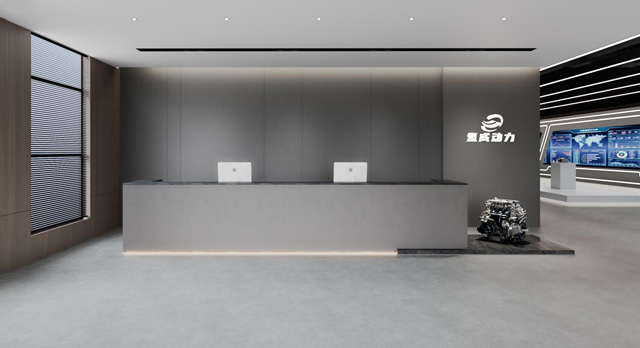
AboutQingcheng Power Technology(Luoyang) Co.,Ltd. is jointly established by Luoyang New Energy Investment and Development Group Co., Ltd., Haizhuo Power (Qingdao) Energy Technology Co., Ltd., Chengdu Yiyi New Energy Automobile Co., Ltd., and Nanjing Hydrogen Maple Technology Partnership (Limited Partnership).
-
ProductsThe company mainly focuses on two major sectors: fuel cell systems, power cells, and energy storage batteries, and is committed to providing leading solutions for hydrogen fuel cell systems and power cell energy storage syste

-
NewsBy giving full play to the advantages of each shareholder to lay the foundation for the sustainable development of the project company, we will develop new product types with more enthusiasm and strong internal management, improve the performance indicators of existing products, and truly let you rest assured.

-
TechnicalThe company's core team has more than 20 years of experience in the field of new energy. It has deep technical reserves in the development of fuel cell systems, engineering services and power storage battery research and development. 1 2 N business system.


News
Committed to providing hydrogen fuel cell systems and power battery energy storage system application solutions
Energy Storage News: Tracking Industry Hotspots!
Release time:
2025-12-15
Source:
On December 10, the Ministry of Industry and Information Technology released the "Administrative Measures for Industrial Technology Foundation Public Service Platforms."

National Policies and Top News
On December 10, the Ministry of Industry and Information Technology released the "Administrative Measures for Industrial Technology Foundation Public Service Platforms."
The management measures stipulate that the entities applying to the service platform shall clearly specify the service industry sector and scope of services they are applying for.
Key industries and sectors served include equipment manufacturing, petrochemicals, iron and steel, nonferrous metals, building materials, light industry, textiles, food, pharmaceuticals, next-generation information technology, biotechnology, new energy, new materials, new-energy vehicles, instrumentation and meters, safety and emergency response, civilian explosives, civil aviation, shipbuilding and marine engineering, green and environmental protection, artificial intelligence, the metaverse, brain-computer interfaces, quantum information, and advanced energy storage technologies, among others.
The service scope primarily includes metrological testing, standard verification and testing, quality and reliability testing, certification and accreditation, industrial information, intellectual property, and technology transfer and commercialization.
Local Policies and Top News
01 The Yunnan Provincial Development and Reform Commission has released the “Yunnan Province’s Plan for High-Quality Promotion of Zero-Carbon Park Development.”
On December 10, the Yunnan Provincial Development and Reform Commission, the Yunnan Provincial Department of Industry and Information Technology, and the Yunnan Provincial Energy Administration jointly issued a notice titled “Yunnan Province’s Plan for High-Quality Promotion of Zero-Carbon Park Development.”
The notice points out that zero-carbon parks should be regarded as an effective platform for fostering and strengthening green productivity and as an important testing ground for accelerating the construction of a new energy system. By adopting approaches such as high-proportion, traceable green electricity supply, green and low-carbon industrial transformation, and efficient and intensive resource utilization, substantial carbon reductions can be achieved. Carbon offsets will be realized through ecological carbon sinks and engineered carbon sinks, ultimately driving the parks toward zero carbon emissions. By 2030, we aim to have built, with high quality, two or more nationally recognized zero-carbon parks—each with national-level influence and supportive of Yunnan’s development—and 15 provincial-level zero-carbon parks, thereby continuously enhancing the green and low-carbon development level of parks across the entire province.
Key tasks: First, accelerate the transformation of energy consumption structures within industrial parks. Specifically, develop tailored integrated energy supply plans for each park to support the high-proportion direct supply of green electricity in zero-carbon parks.
Second, we will vigorously promote energy conservation and carbon reduction in industrial parks. Specifically, we will support parks in implementing comprehensive energy efficiency improvement projects and encourage them to establish management systems for energy consumption and carbon emissions.
Third, we will adjust and optimize the industrial structure of the park. Specifically, we will focus on clustering and developing “green electricity + advanced manufacturing,” deepen the “green-for-green” industrial model—using green energy to produce green products—and foster emerging industries such as “green electricity + intelligent computing power.”
Fourth, we will strengthen the efficient and intensive use of park resources. We will enhance green supply-chain management within parks and promote the development of optimal material and energy circulation pathways both within and across enterprises in the parks.
Fifth, we will improve and upgrade the park’s infrastructure, with a primary focus on promoting coordinated carbon reduction across multiple sectors, including construction, transportation, and carbon sinks.
Sixth, we must strengthen the application of advanced and suitable technologies. Specifically, we need to accelerate breakthroughs in green and low-carbon technologies and promote carbon reduction at the source, during processes, and through end-of-pipe carbon capture and storage.
Seventh, enhance the park’s energy and carbon management capabilities. This primarily involves supporting the full utilization of advanced technologies such as artificial intelligence and the Internet of Things to build an energy and carbon management platform.
02 The Department of Transport of Anhui Province has released the “Implementation Plan for Promoting the Integrated Development of Transportation and Energy in Anhui Province.”
On December 10, the Department of Transport of Anhui Province released an interpretation of the "Implementation Plan for Promoting the Integrated Development of Transportation and Energy in Anhui Province." The document emphasizes the promotion of integrated construction of transportation and energy infrastructure, with key focuses including advancing the development and utilization of clean energy in areas such as highways, port waterways, transportation hubs, railways, and postal services. In light of our province's specific conditions, the plan highlights initiatives such as "developing integrated photovoltaic-storage-charging projects" and "supporting the construction of building-integrated photovoltaics," thereby boosting the development of our province's advanced photovoltaic and new energy storage industries.
Promote the efficient and stable operation of transportation and energy infrastructure. This primarily involves enhancing the resilience and emergency response capabilities of transportation energy systems, as well as fostering synergistic interactions with the energy grid. In light of our province’s specific conditions, we particularly recommend initiatives such as “supporting Hefei City and other regions to carry out pilot programs for large-scale vehicle-grid interaction” and “pooling resources along transportation infrastructure—including photovoltaic, wind power, energy storage, and charging stations—and leveraging highway service areas and monitoring centers to establish virtual power plants, thereby enabling these entities to participate collaboratively as new types of market players in optimizing the power system and engaging in electricity market transactions.” We also encourage pilot projects involving emerging technologies and the participation of new types of market players in green electricity trading.
03 The Shaanxi Provincial Development and Reform Commission issued the “Notice on Strengthening the Standardized Management of New Energy Storage Projects in Our Province (Draft for Comments).”
On December 9, 2025, the Shaanxi Provincial Development and Reform Commission issued the "Notice on Strengthening the Standardized Management of New Energy Storage Projects in Our Province (Draft for Comments)." The notice requires all cities to conduct scientific assessments of energy storage needs, formulate annual construction plans for new energy storage projects in their respective regions, and submit these plans. Grid enterprises should, based on the functional positioning of new energy storage projects and while ensuring the safe operation of the power system, give priority to dispatching such projects, thereby maximizing the utilization rate of new energy storage and fully realizing the value of various types of energy storage.
For the first-phase Shaanxi-Hubei DC transmission project and the Weinan New Energy Base shared energy storage power station, which have not commenced construction by the end of 2025, the respective cities shall organize the replacement of the project entities, or the owners of the new energy projects at the base may independently configure energy storage facilities. New energy storage projects shall commence construction within one year after obtaining the filing documents; projects that fail to commence construction on schedule shall be promptly removed from the annual construction plan. Projects that have not commenced construction within two years after filing will have their filings canceled in accordance with applicable laws and regulations, and the publicly announced filing information will be withdrawn accordingly. The grid connection opinions associated with such projects will also become invalid simultaneously. Before connecting to the grid and undergoing commissioning, new energy storage projects must complete all relevant procedures in compliance with national regulations concerning quality, environmental protection, and fire safety.
04 The Sichuan Provincial Development and Reform Commission is soliciting public comments on the “Implementation Rules for Orderly Promoting Direct Connection Development of Green Electricity in Sichuan Province (Draft for Comments).”
On December 8, the Sichuan Provincial Development and Reform Commission released the "Implementation Details for Orderly Promoting Direct Connection of Green Electricity in Sichuan Province (Draft for Comments)."
The document proposes that green power direct-purchase projects should, based on the characteristics and scale of electricity consumption loads, scientifically determine the types and scales of new energy sources and regulating resources. The proportion of annual self-generated and self-consumed renewable energy in the total available generation capacity of such projects should be no less than 60%, and the proportion relative to total electricity consumption should be no less than 30%. Moreover, the self-consumption ratio should continue to increase, reaching at least 35% by 2030. Before our province’s electricity spot market begins continuous operation, green power direct-purchase projects are not permitted to feed electricity back into the public grid. After the electricity spot market operates continuously, these projects may adopt a model primarily focused on self-generation and self-consumption, with surplus power fed into the grid as a secondary option. For grid-connected green power direct-purchase projects, the proportion of surplus power fed into the grid relative to total available generation capacity shall, in principle, not exceed 10% in the “Three Prefectures and One City” (Aba Prefecture, Ganzi Prefecture, Liangshan Prefecture, and Panzhihua City), and shall, in principle, not exceed 20% in other regions. For off-grid green power direct-purchase projects, the configuration of new energy sources and energy storage systems must meet the load’s requirements for safe and stable power supply.
If the project’s power source and load are not under the same investment entity, a multi-year power purchase agreement or an energy performance contract should be signed. Additionally, agreements should be drawn up covering matters such as power facility construction, property rights allocation, operation and maintenance, dispatching and operation, settlement arrangements, and liability for breach of contract. The key focus of the overall implementation plan assessment is to conduct coordinated research and optimization—based on local new energy resource conditions and grid connection methods—of the direct supply scale of new energy proposed by the owners of green-power direct-link projects. The direct-supply new-energy scale shall be incorporated into the overall implementation plan of the green-power direct-link project (and thus no separate implementation plan for the new-energy project will be required). Such new energy should be developed and consumed locally and nearby, and cross-city (or prefectural) allocation is strictly prohibited.
The power sources, loads, energy storage systems, and other components of green electricity direct-connection projects shall be constructed and put into operation simultaneously in accordance with the overall implementation plan. In principle, new-energy incentive resources will be allocated in a single lump sum after the completion and commissioning of green electricity direct-connection projects that integrate computing and power generation. Considering the practical realities of computing infrastructure development, for integrated computing-and-power projects that genuinely require phased development, new-energy incentives may be allocated in phases according to the corresponding scale proportions, following the “Incentive Measures for Accelerating the Development of Multi-Energy Complementary Power Sources” issued by our province.
05 The Hunan Regulatory Office of the National Energy Administration has issued the “Implementation Rules for the Management of Ancillary Services in Hunan (Draft for Comments)” and the “Implementation Rules for the Grid Connection and Operation Management of Hunan Power (Draft for Comments).”
On December 5, the Hunan Energy Regulatory Office issued the "Implementation Rules for the Management of Ancillary Services in Hunan (Draft for Comments)" and the "Implementation Rules for the Grid Connection and Operation Management of Hunan Power (Draft for Comments)."
Among them, the "Implementation Rules for the Management of Ancillary Services in Hunan Power System" clearly defines compensation standards for various types of ancillary services. Specifically, independently operated new energy storage systems included under these rules must have a capacity of no less than 2 MW/2 MWh. Moreover, whether on the generation side or the user side, independently operated new energy storage systems and pumped hydro storage are temporarily exempt from participating in the allocation of ancillary service costs.
The document clearly defines new-type energy storage systems as follows: These systems must possess independent metering and control capabilities, be capable of being integrated into the dispatch automation system for grid monitoring and dispatch, comply with relevant standards, regulations, and requirements set forth by power market operators and other pertinent parties, and have legal person status as independent electrochemical energy storage power stations. Compressed air and flywheel-based independent new-type energy storage systems shall be governed by analogous provisions. Independent new-type energy storage systems subject to these detailed rules must have a capacity of no less than 2 MW/2 MWh.
New energy storage projects established in the form of co-constructed facilities—once their on-site metering, control, and other related systems have been upgraded and meet the relevant technical requirements—are encouraged to be integrated with other types of power sources they are paired with and treated as a single entity when participating in the electricity market. Alternatively, if such projects can meet equivalent technical specifications and safety standards through technological upgrades, they may opt to transition into standalone energy storage projects.
Grid-connected entities on the load side: Traditional high-energy-consuming industrial loads, interruptible commercial and industrial loads, electric vehicle charging networks, and other directly controllable adjustable loads capable of responding to power dispatch instructions (including those aggregated through aggregators or virtual power plants, etc.). The capacity of directly controllable adjustable loads included under these detailed rules shall be no less than 5 MW, with an upward or downward adjustment capability of no less than 5 MW, and a duration of no less than 1 hour.
06 The People's Government of Yangzhou City, Jiangsu Province, has issued the “Implementation Plan for Promoting the Construction of (Near) Zero-Carbon Parks in Yangzhou City.”
On December 4, the People's Government of Yangzhou City, Jiangsu Province, issued the "Implementation Plan for Promoting the Construction of (Near) Zero-Carbon Parks in Yangzhou City," which supports the city’s Economic Development Zone in following the application requirements for national-level zero-carbon parks to advance the development and construction of rooftop distributed photovoltaic systems. The plan also aims to boost the development of industries such as new energy, new optoelectronics, and high-end intelligent manufacturing, accelerate the adoption of green electricity in industrial sectors, promote energy-saving and carbon-reduction upgrades, enhance resource recycling, step up the deployment of energy storage and hydrogen energy applications, significantly increase the capacity for supplying and consuming green energy, strengthen the park’s carbon sink capabilities, and ultimately achieve zero-carbon development within the park. By 2025, the energy consumption per unit of industrial value-added output among enterprises within the park will be reduced to 0.3 tons of standard coal per 10,000 yuan, carbon dioxide emissions per unit of industrial value-added output will be lowered to 0.9 tons per 10,000 yuan, and the proportion of renewable energy use will rise to 15%. By 2030, the energy consumption per unit of industrial value-added output among enterprises within the park will be further reduced to 0.25 tons of standard coal per 10,000 yuan, carbon dioxide emissions per unit of industrial value-added output will be cut to 0.6 tons per 10,000 yuan, and the proportion of renewable energy use will increase to 30%. The plan also supports the construction of distributed photovoltaic power generation systems and energy storage facilities within the park, enabling self-sufficiency in energy supply and allowing surplus electricity to be fed into the grid. Furthermore, it promotes a green and low-carbon transformation of industrial sectors.
Support enterprises in building industrial smart microgrids, distributed photovoltaic power generation systems, and energy storage facilities to increase the proportion of clean energy usage.
By 2027, we aim to have built 10 zero-carbon factories. By 2030, we will have built 20 zero-carbon factories.
By effectively integrating distributed energy resources, continuously enhancing the power grid’s disaster resilience and its capacity to accommodate distributed photovoltaic systems, and genuinely improving the safe operation of the power grid under extreme conditions, we can integrate distributed energy resources. We will encourage enterprises within industrial parks to build distributed photovoltaic power generation and energy storage facilities, thereby achieving energy self-sufficiency and enabling surplus electricity to be fed into the grid.
Support the development of smart microgrids in industrial parks, integrate distributed energy resources, and enhance energy utilization efficiency. Elevate the intelligence level of the power grid. Leveraging technologies such as big data and the Internet of Things, establish a smart microgrid management platform to enable real-time monitoring and intelligent dispatching of distributed energy sources. Encourage enterprises within the park to advance the digitalization of energy management, thereby improving both energy utilization efficiency and management standards. This year, we will launch pilot projects for 13 microgrids that achieve autonomous balance and multi-energy complementarity. By 2027, we aim to have built approximately 30 smart microgrid projects. By 2030, we plan to have constructed around 50 smart microgrid projects.
Integrate adjustable load resources. Coordinate the development of virtual power plants at both the municipal and district levels, as well as specific scenarios such as public buildings, charging (and battery-swapping) facilities, and data centers. Gradually promote power-generation projects including new energy storage systems, distributed photovoltaic systems, and distributed natural gas power generation. Encourage industrial enterprises, public institutions, commercial air-conditioning systems, and other adjustable-load resources within industrial parks to connect to virtual power plants, thereby enhancing the flexibility and stability of the power grid. By 2025, the maximum aggregated capacity of registered virtual power plants will reach 400,000 kilowatts. By 2027, we aim to increase the maximum aggregated capacity of registered virtual power plants within industrial parks to 600,000 kilowatts.
07 The Guizhou Provincial Development and Reform Commission has released the “Regulations on Promoting the Development and Application of Big Data in Guizhou Province.”
On December 4, the Guizhou Provincial Development and Reform Commission released the "Regulations on Promoting the Development and Application of Big Data in Guizhou Province," which explicitly states: Power supply enterprises are encouraged to ensure efficient and stable power supply to data centers—and reduce electricity costs—through measures such as off-peak power supply, load adjustment, and coordinated computing and power management.
In addition, the document also requires that relevant departments of the People’s Government of Guizhou Province should promote the green and low-carbon development of data centers, establish a mechanism for supplying green electricity to data centers, and support the adoption of new energy-saving technologies and green building techniques, as well as leveraging local climate and topographical features, to reduce data center energy consumption. Data centers are encouraged to participate in green power trading and lower their energy costs by purchasing renewable energy and green electricity certificates.
The data management authority of the Guizhou Provincial People’s Government, together with relevant departments such as energy authorities, has established a collaborative mechanism for computing and power resources. This mechanism promotes coordinated planning, integrated construction, and joint operation of computing infrastructure and power facilities. It also coordinates with power supply enterprises to strengthen the construction and upgrade of power supply facilities, thereby ensuring that data centers have adequate electricity supply to meet their operational needs. Disclaimer: We respect original works and place great emphasis on sharing. The images and text are sourced from the internet; copyright belongs to their respective owners. If there are any issues regarding content, copyright, or other matters, please contact us at 037963859669 for removal.

Key words:
Previous Page:
Recommended News
Contact
Address: Chanhe Innovation Technology Park, No. 2 Zhenxing Road, Chanhe Hui District, Luoyang City, Henan Province
Tel:0379-63869669
Mailbox:info@hydromobility.cn
Scan

Copyright©2023 Qingcheng Power Technology(Luoyang) Co.,Ltd. This website supports ipv6
 豫公网安备41030402000254号
Copyright©2023 Qingcheng Power Technology(Luoyang) Co.,Ltd.
This website supports ipv6