

-
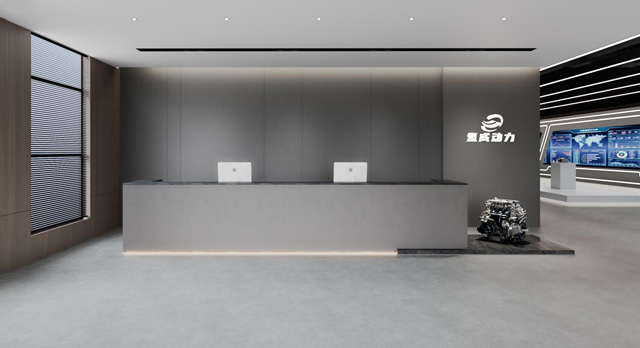
AboutQingcheng Power Technology(Luoyang) Co.,Ltd. is jointly established by Luoyang New Energy Investment and Development Group Co., Ltd., Haizhuo Power (Qingdao) Energy Technology Co., Ltd., Chengdu Yiyi New Energy Automobile Co., Ltd., and Nanjing Hydrogen Maple Technology Partnership (Limited Partnership).
-
ProductsThe company mainly focuses on two major sectors: fuel cell systems, power cells, and energy storage batteries, and is committed to providing leading solutions for hydrogen fuel cell systems and power cell energy storage syste

-
NewsBy giving full play to the advantages of each shareholder to lay the foundation for the sustainable development of the project company, we will develop new product types with more enthusiasm and strong internal management, improve the performance indicators of existing products, and truly let you rest assured.

-
TechnicalThe company's core team has more than 20 years of experience in the field of new energy. It has deep technical reserves in the development of fuel cell systems, engineering services and power storage battery research and development. 1 2 N business system.


News
Committed to providing hydrogen fuel cell systems and power battery energy storage system application solutions
Energy Storage News: Tracking Industry Hotspots!
Release time:
2026-06-01
Source:
On May 26, the Comprehensive Department of the National Energy Administration issued the “Notice on the Release of the List of High-Value ‘AI Plus’ Energy Scenarios and the Organization of Pilot Project Applications,” designating 51 scenarios—including “Intelligent Optimization for Full-Lifecycle Safety Diagnosis and Control of Energy Storage”—as the first batch of high-value “AI Plus” energy applications. The list also encompasses such scenarios as intelligent coordinated operation of virtual power plants across multiple temporal and spatial scales, smart coordinated scheduling and operation of green‑power direct‑to‑compute integration, and high‑accuracy power forecasting applicable to diverse new‑energy settings.

Top Political News
01 The Comprehensive Department of the National Energy Administration has issued the “Notice on the Release of the List of High-Value ‘AI Plus’ Energy Scenarios and the Organization of Pilot Project Applications.”
On May 26, the Comprehensive Department of the National Energy Administration issued the “Notice on the Release of the List of High-Value ‘AI Plus’ Energy Scenarios and the Organization of Pilot Project Applications,” designating 51 scenarios—including “Intelligent Optimization for Full-Lifecycle Safety Diagnosis and Control of Energy Storage”—as the first batch of high-value “AI Plus” energy applications. The list also encompasses such initiatives as intelligent coordinated operations of virtual power plants across multiple temporal and spatial scales, smart coordinated dispatching and operation integrating green electricity with computing‑power supply, and high‑accuracy power forecasting applicable to diverse new‑energy scenarios.
02 Wang Hongzhi, Director of the National Energy Administration, stated that during the 15th Five-Year Plan period, the nation’s electricity consumption for computing power is expected to increase by more than 100 billion kilowatt-hours annually on average.
At the National “AI Plus” Energy On-site Promotion Conference held on the 26th, the National Energy Administration stated that by 2025, China will have built 42 exascale‑class intelligent computing clusters, with total electricity consumption at national computing centers reaching 170 billion kilowatt-hours—accounting for 1.6% of the nation’s overall electricity use. Among the eight major hub nodes of the national integrated computing power network, electricity demand from computing centers has become the primary driver of growth, with an average annual increase of approximately 39.5% over the past three years—far outpacing the average growth rate of total societal electricity consumption.
At the conference, Wang Hongzhi, Director of the National Energy Administration, stated that with the rapid advancement of artificial intelligence, the continuous upgrading of ultra-large-scale intelligent computing clusters and the accelerated aggregation of new‑type productive forces such as chip manufacturing are giving rise to new characteristics and trends in electricity demand—namely, high growth rates, high density, concentrated spatial distribution, and increasing operational complexity—while the need for high‑quality power supply is steadily rising. It is projected that during the 15th Five-Year Plan period, national electricity consumption for computing will increase by more than 100 billion kilowatt-hours annually, reaching approximately 800 billion kilowatt-hours by 2030, accounting for around 6% of total societal electricity consumption.
Local Policies and Key News
01 The People’s Government of Yunnan Province has issued the “Implementation Plan for Strengthening the Construction of a Digital Information Corridor and Promoting High-Quality Development of the Digital Industry.”
On May 20, the People’s Government of Yunnan Province issued the “Implementation Plan for Strengthening the Construction of a Digital Information Corridor and Promoting High-Quality Development of the Digital Industry.” The document proposes accelerating the development of a new‑generation power system, exploring models such as coordinated electricity‑computing integration and direct green‑power connections, and enhancing the quality and efficiency of green energy supply. With regard to development goals, the plan aims that by 2027, the Kunming International Telecommunications Business Entry/Exit Bureau will play a significant enabling role, with cross‑border terrestrial cable transmission capacity reaching 9 Tbps and the province’s total computing power reaching 20 Eflops.
02 The Yunnan Energy Administration has released the “Implementation Plan for Promoting High-Quality Development of the Energy Sector through ‘Artificial Intelligence Plus’ in Yunnan Province (2026–2030).”
On May 20, the Yunnan Energy Administration released the “Implementation Plan for Promoting High-Quality Development of the Energy Sector through ‘Artificial Intelligence Plus’ in Yunnan Province (2026–2030).” The plan will focus on the operation of various new business models—such as electricity markets, virtual power plants, hydrogen energy, energy storage, and large-scale, intelligent load aggregators—and leverage artificial intelligence to achieve deep integration among green power, intelligent computing, and advanced manufacturing, thereby fostering a new AI‑plus‑energy ecosystem.
03 The Xinjiang Development and Reform Commission has issued the “Notice on Matters Concerning the Improvement of the Capacity Tariff Mechanism on the Generation Side in Our Region.”
On May 22, the Xinjiang Development and Reform Commission issued the “Notice on Matters Concerning the Improvement of the Capacity Tariff Mechanism on the Generation Side in Our Region.” The document specifies that, for grid‑side standalone new‑type energy storage facilities included in the list‑based management system, the capacity tariff rate shall be calculated as follows: Capacity tariff rate = Coal‑fired power capacity tariff rate × (continuous full‑power discharge duration ÷ the annual longest net load peak duration), with a conversion ratio capped at 1.0. For now, the annual longest net load peak duration is set at 6 hours. Effective from 2026, the coal‑fired power capacity tariff rate will be RMB 165 per kilowatt‑year.
04 The Shandong Energy Regulatory Office has launched a special regulatory review for the 2026 fair and open access of the Shandong provincial power grid, as well as a “look-back” assessment of rectification measures in the comprehensive regulation of the power sector.
The Shandong Energy Regulatory Office recently launched a special regulatory review for 2026 on the fair and open access of the provincial power grid, along with a “look-back” assessment of corrective measures in the broader electricity sector. The regulatory effort integrates on-site inspections with a “look-back” phase to address outstanding issues, focusing on key pain points that hinder improvements in the quality and efficiency of fair and open grid services. This includes targeted oversight of investment and construction of grid‑connection projects, the implementation of buyback arrangements, and the occurrence of unauthorized charges, as well as rigorous scrutiny of compliance in grid‑connection procedures for power sources and energy storage facilities, and adherence to prescribed processing time limits.
05 The Shandong Provincial Energy Administration has issued the “Implementation Opinions on Promoting High-Quality Development of Photovoltaic Power Generation.”
On May 25, the Shandong Provincial Energy Administration issued the “Implementation Opinions on Promoting High-Quality Development of Photovoltaic Power Generation,” which stated that it will enhance the integrated aggregation and operation of photovoltaic–storage systems. The document encourages the installation of energy storage alongside photovoltaic power plants, promotes the voluntary addition or expansion of storage capacity at existing photovoltaic projects, and supports the coordinated dispatch of photovoltaic generation and its associated storage to build grid‑friendly new‑energy power stations. Priority will be given to deploying energy storage facilities at grid hub substations in large‑scale photovoltaic collection areas and concentrated distributed‑photovoltaic development zones, while exploring the deployment of neighborhood‑level storage and “cloud‑based” storage in regions where new‑energy development is constrained, thereby expanding capacity for accommodating renewable energy. In areas where the grid currently has no available capacity, users are encouraged to install energy storage on the demand side; provided that reverse overloads, voltage violations, excessive short‑circuit currents, and harmonic limits are not exceeded, fully self‑consumed distributed photovoltaic systems may be developed.
06 The Guangdong Provincial Development and Reform Commission has issued the “Notice on Further Optimizing Our Province’s Peak–Valley Time-of-Use Electricity Pricing Policy” (Draft for Public Comment).
Recently, the Guangdong Provincial Development and Reform Commission issued the “Notice on Further Optimizing Our Province’s Peak–Valley Time-of-Use Electricity Pricing Policy” (draft for public comment), making adjustments to the peak–valley time periods and the implementation standards for super‑peak tariffs. Under this revision, the morning valley period across the year has been shortened by one hour, while an additional one-hour valley segment has been added during midday; the total valley period remains at eight hours, with no other changes. The optimized time-of-use schedule is as follows: peak hours from 10:00 a.m. to 12:00 p.m. and from 2:00 p.m. to 7:00 p.m.; valley hours from 1:00 a.m. to 8:00 a.m. and from 12:00 p.m. to 1:00 p.m.; and flat‑rate periods for all other times. The price ratio among peak, flat, and valley rates will remain unchanged at the current 1.7:1:0.38.
07 The Shanxi Regulatory Office of the National Energy Administration has issued the “Detailed Rules for the Operation of the Shanxi Electricity Mid- and Long-Term Market.”
On May 26, the Shanxi Regulatory Office of the National Energy Administration issued the “Detailed Rules for the Operation of the Shanxi Electricity Mid- and Long-Term Market.” The new regulations stipulate that, for market participants engaging directly in trading, no artificial caps will be imposed on time-of-use electricity prices or on specific time periods. For multi-month continuous trading, the price limits for monthly and ten-day time‑segmented transactions are set at RMB 95.62–764.93 per MWh; daily rolling‑forward trading, in principle, adopts spot‑market price caps, with a range of RMB 0–1,500 per MWh.
08 The Jilin Provincial Energy Administration and the Jilin Provincial Development and Reform Commission have issued the “Implementation Plan for Accelerating the Integrated and Comprehensive Development of New Energy in Jilin Province.”
On May 27, the Jilin Provincial Energy Administration and the Jilin Provincial Development and Reform Commission issued the “Implementation Plan for Accelerating the Integrated Development of New Energy in Jilin Province.” The document explicitly states that by achieving “horizontal integration” across multiple energy sources, “vertical integration” along the industry chain, and “front-to-back integration” between production and consumption, the system can be optimized, fostering a dynamically balanced framework on a broader scale. In terms of overall objectives, the plan aims to complete more than 50 integrated‑fusion projects and application scenarios by 2030. Specifically, the “horizontal integration” approach involves combining wind power, photovoltaics, solar thermal, advanced energy storage, biomass, geothermal, and other resources to develop large‑scale, base‑level projects. This includes exploring the deployment of wind and solar PV facilities, along with energy storage systems, within and around existing coal‑fired power plants, thereby creating integrated wind–solar–thermal–storage coordinated operation projects. Additionally, virtual power plants will aggregate user‑side energy storage, charging and battery‑swapping infrastructure, and distributed PV installations at charging stations, establishing a two‑way interactive system for both information and energy flows.
Information
01 200 GW! By 2030, the EU will need to significantly expand its energy storage capacity.
Several European clean-energy industry organizations have welcomed the EU’s measures to curb disruptions in fossil-fuel supply chains and mitigate energy-price shocks, while noting that significant gaps remain. In response, on April 22, the European Commission (EC) unveiled a package of measures known as the “Emergency Policy Toolbox,” part of the AccelerateEU initiative. The toolbox includes setting a unified EU-wide electrification target, backed by the Industrial Decarbonization Bank, and calling on member states to reduce electricity taxes. Moreover, the scale of energy-storage systems deployed across the EU must expand substantially, reaching roughly 200 GW by 2030—growth that will rely primarily on battery‑based storage.
02 Institutional forecasts project that by 2026, global energy storage system capacity will reach 158 GW/459 GWh.
Following a record-breaking 112 GW of new non‑pumped hydro storage capacity added globally in 2025, market research firm BloombergNEF forecasts that this figure will grow by another 41% this year. Recently, BloombergNEF released its “Energy Storage Market Outlook for the First Half of 2026” report. According to the firm’s data, global additions in 2025 totaled 112 GW/307 GWh of storage capacity, and it projects that worldwide deployment will reach 158 GW/459 GWh by 2026. Despite a moderation in the growth rate of new solar and wind power installations, the energy storage market continues to exhibit robust expansion.
Disclaimer: We respect original works and value sharing. The materials are sourced from the internet, and the copyright belongs to the original authors. If there are any issues regarding the content, copyright, or other matters, please contact us at 037963859669 for removal.
Key words:
Previous Page:
Recommended News
Contact
Address: Chanhe Innovation Technology Park, No. 2 Zhenxing Road, Chanhe Hui District, Luoyang City, Henan Province
Tel:0379-63869669
Mailbox:info@hydromobility.cn
Scan

Copyright©2023 Qingcheng Power Technology(Luoyang) Co.,Ltd. This website supports ipv6
 豫公网安备41030402000254号
Copyright©2023 Qingcheng Power Technology(Luoyang) Co.,Ltd.
This website supports ipv6