

-
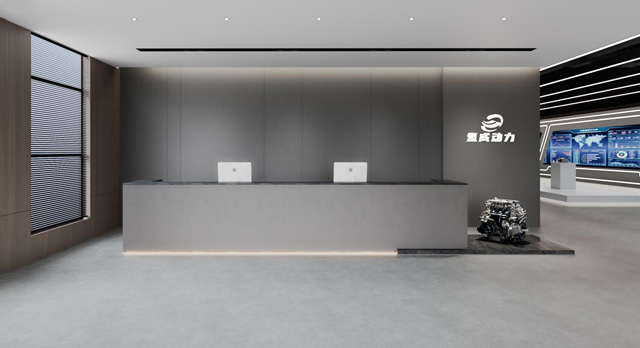
AboutQingcheng Power Technology(Luoyang) Co.,Ltd. is jointly established by Luoyang New Energy Investment and Development Group Co., Ltd., Haizhuo Power (Qingdao) Energy Technology Co., Ltd., Chengdu Yiyi New Energy Automobile Co., Ltd., and Nanjing Hydrogen Maple Technology Partnership (Limited Partnership).
-
ProductsThe company mainly focuses on two major sectors: fuel cell systems, power cells, and energy storage batteries, and is committed to providing leading solutions for hydrogen fuel cell systems and power cell energy storage syste

-
NewsBy giving full play to the advantages of each shareholder to lay the foundation for the sustainable development of the project company, we will develop new product types with more enthusiasm and strong internal management, improve the performance indicators of existing products, and truly let you rest assured.

-
TechnicalThe company's core team has more than 20 years of experience in the field of new energy. It has deep technical reserves in the development of fuel cell systems, engineering services and power storage battery research and development. 1 2 N business system.


News
Committed to providing hydrogen fuel cell systems and power battery energy storage system application solutions
Energy Storage News: Tracking Industry Hotspots!
Release time:
2026-05-25
Source:
Recently, Ding Xuexiang, a member of the Standing Committee of the Political Bureau of the CPC Central Committee and Vice Premier of the State Council, conducted field inspections in Beijing, Hebei, and Inner Mongolia to assess the development of the computing power network. He emphasized the need to thoroughly implement the important instructions of General Secretary Xi Jinping and, in accordance with the strategic plan outlined in the 15th Five-Year Plan, strengthen top-level design and scientific planning, advance the construction of a nationally integrated computing power network, and promote its intensive and efficient utilization, thereby empowering high-quality economic and social development. He stated that computing power is a key indicator of a country’s overall national strength, and that it must be planned and built in a coordinated and orderly manner, with a strong focus on matching supply and demand and coordinating computing and energy resources, so as to accelerate the establishment of a unified national network.

Current Affairs Highlights
01 During a field visit to examine the development of the computing power network, Ding Xuexiang emphasized the need to accelerate the establishment of a nationwide integrated computing power network to drive high-quality economic and social development.
Recently, Ding Xuexiang, a member of the Standing Committee of the Political Bureau of the CPC Central Committee and Vice Premier of the State Council, conducted field inspections in Beijing, Hebei, and Inner Mongolia to assess the development of the computing power network. He emphasized the need to thoroughly implement the important instructions of General Secretary Xi Jinping and, in accordance with the plans outlined in the 15th Five-Year Plan, strengthen top-level design and strategic planning, advance the construction of a nationally integrated computing power network, and promote its intensive and efficient utilization to drive high-quality economic and social development. He stated that computing power is a key indicator of a country’s overall national strength, and that it must be planned and built in a coordinated and orderly manner, with a strong focus on matching supply with demand and coordinating computing with energy use, so as to accelerate the establishment of a unified national network.
02 The National Development and Reform Commission and the National Energy Administration have issued the “Notice on Matters Concerning the Orderly Promotion of the Development of Direct Green Power Supply among Multiple Users.”
03 The General Office of the Ministry of Industry and Information Technology has issued the “Notice on Organizing and Carrying Out the 2026 Industrial Energy Conservation Supervision Work.”
On May 13, 2026, the General Office of the Ministry of Industry and Information Technology issued a notice titled “Notice on Organizing and Carrying Out the 2026 Industrial Energy Conservation Supervision Work,” which stated that, in accordance with the mandatory energy consumption limit standards for relevant industries as well as requirements regarding energy efficiency benchmark levels and baseline levels, energy conservation inspections will be conducted on enterprises operating in sectors such as steel, methanol, polyvinyl chloride, electrolytic aluminum, and data center facilities.
Local Policies and Key News
On May 12, 2026, three departments of Jilin Province jointly issued the “Notice on Clarifying Relevant Matters Concerning Energy Storage Pricing Policies” (Ji Fa Gai Jia Ge Lian [2026] No. 240), which stipulates that grid‑side standalone new‑type energy storage facilities that do not participate in ancillary‑service capacity‑allocation schemes shall be subject to a capacity‑compensation policy. The capacity‑compensation rate is based on Jilin Province’s coal‑power capacity‑tariff standard of RMB 330 per kW per year, adjusted proportionally according to peak‑shaving capability (the adjustment factor is the ratio of the duration of continuous full‑power discharge to the longest annual net‑load peak duration; the maximum factor is 1. For our province, the longest annual net‑load peak duration is set at 8 hours, corresponding to the maximum sustained duration within the top 1% of net‑load peaks over the past three years). The resulting capacity‑related charges are incorporated into system‑operation costs and allocated among all industrial and commercial users. Grid‑side standalone new‑type energy storage facilities operate under a roster‑based management system: charging is billed at the single‑energy‑quantity tariff for transmission and distribution, while discharging benefits from reductions in transmission and distribution fees. On the generation side, energy storage is settled in an integrated manner with renewable‑energy plants. At the user side, energy storage is aligned with the electricity‑consumption characteristics of its associated user and, in principle, does not discharge power back to the grid. If a grid‑side standalone new‑type energy storage facility fails to meet performance standards twice within a month, 10% of that month’s capacity‑related charges will be deducted; if it fails three times, 50% will be deducted; and if it fails four or more times, 100% of the monthly capacity charges will be withheld. Furthermore, any grid‑side standalone new‑type energy storage facility whose monthly capacity charges are fully deducted three times during a calendar year will be disqualified from receiving further capacity‑related payments for the remainder of that year.
02 The Jiangxi Provincial Development and Reform Commission has publicly solicited comments on the “Jiangxi Province Electricity Market‑Based Demand Response Implementation Plan (Draft for Comments).”
The Jiangxi Provincial Development and Reform Commission has publicly solicited comments on the “Jiangxi Province Electricity Market‑Based Demand Response Implementation Plan (Draft for Comments),” which stipulates that invitation‑based peak‑shaving response refers to market participants, upon receiving an invitation from the grid operator prior to a predicted future electricity demand peak, voluntarily reducing their load during an agreed‑upon time period. The compensation rate for this type of response is capped at RMB 3 per kWh and floor‑limited at RMB 0 per kWh, with the final rate determined through market‑based bidding. Real‑time peak‑shaving response occurs when the power system faces acute supply‑demand imbalances or short‑term power shortages; in such cases, market participants immediately curtail their load in accordance with grid‑operator dispatch instructions. Compensation for real‑time peak‑shaving is calculated by multiplying the most recent market‑clearing price from the invitation‑based peak‑shaving auction by a compensation factor, currently set at 1.5. Invitation‑based valley‑filling response applies when the grid experiences high output from clean energy sources—posing challenges for absorption—or requires maintaining real‑time balance. Upon receiving an invitation, participants proactively increase their load during an agreed‑upon time window. The compensation rate for this type of response is capped at RMB 0.5 per kWh and floor‑limited at RMB 0 per kWh, with the final rate also determined through market‑based bidding. Demand‑response resources comprise adjustable loads owned by market participants, categorized by load type into industrial and commercial adjustable loads, building‑level loads, virtual power plants, electric‑vehicle charging facilities, and user‑side energy storage loads. Independent energy storage systems and grid‑connected storage assets are encouraged to participate in demand response—subject to compliance with dispatch instructions—via aggregation through load aggregators or virtual power plants. Participants must: hold a provincially independent electricity marketing account within the State Grid’s marketing management system; possess the capability to collect 96 load‑profile data points per day and meet data‑transmission requirements; maintain a response duration of no less than one hour and a response capacity of at least 200 kW; and allow users with response capacities below 200 kW to participate through a load aggregator. Additionally, they must have legal person status, independent financial accounting, good credit standing, and the ability to independently assume civil liability; hold a power‑sales company license and be duly registered on the Jiangxi Provincial Electricity Trading Center platform; and demonstrate integrated demand‑response capacity of no less than 2,000 kW, with virtual power plants and their aggregated resources collectively offering at least 5,000 kW of response capacity.
03 Notice of the General Office of the People’s Government of the Inner Mongolia Autonomous Region on Issuing the “Ten Measures for Financial Support to the Real Economy (2026)”
On May 14, the General Office of the People’s Government of the Inner Mongolia Autonomous Region issued a notice promulgating the “Ten Measures for Financial Support to the Real Economy (2026).” The measures explicitly call for bolstering support for key industries. A large-scale credit initiative worth hundreds of billions yuan will be launched for sand‑desert‑barren‑land development bases, with new credit lines for energy‑related enterprises totaling no less than RMB 50 billion. Financial services for rare‑earth industry clusters will be strengthened, aiming for a 10% increase in financing for rare‑earth enterprises. Enterprises will be supported in issuing science‑and‑technology innovation bonds, with a cumulative issuance volume of RMB 50 billion for the year. Furthermore, tools such as real estate investment trusts (REITs) and asset‑backed securities (ABS) will be fully leveraged to facilitate the listing of one or more projects. Listed companies will also be encouraged to engage in mergers and acquisitions and corporate restructuring.
On May 18, the Southern Regional Electricity Trading Platform issued a notice soliciting public comments on draft revisions to several electricity market rules and schemes. These documents aim to further refine the Southern Region’s “1+N” regulatory framework, clarify the operational roadmap for transitioning the spot market to formal operation in 2026, standardize registration and management procedures for market participants, and optimize inter‑provincial and inter‑regional medium- and long-term trading mechanisms, thereby providing institutional safeguards for the deeper advancement and stable, formal operation of the Southern Regional Electricity Market.
Information
Recently, the China Electricity Council and the National Electrochemical Energy Storage Power Station Safety Monitoring Information Platform jointly released the “Q1 2026 Statistical Brief on the Electrochemical Energy Storage Industry.” The report indicates that during the first quarter, the utilization of electrochemical energy storage power stations improved, with an average daily utilization of 3.1 hours—up 0.27 hours year over year; an average of 0.67 equivalent charge–discharge cycles per day; and an average utilization index of 48%. By application scenario, both standalone energy storage and new‑energy‑plus‑storage systems showed increased utilization compared to the first quarter of 2025: standalone storage recorded an average daily utilization of 3.28 hours, up 0.09 hours quarter over quarter and 0.31 hours year over year; while new‑energy‑plus‑storage achieved an average daily utilization of 2.25 hours, down 0.01 hours quarter over quarter but up 0.41 hours year over year.
Key words:
Previous Page:
Recommended News
Contact
Address: Chanhe Innovation Technology Park, No. 2 Zhenxing Road, Chanhe Hui District, Luoyang City, Henan Province
Tel:0379-63869669
Mailbox:info@hydromobility.cn
Scan

Copyright©2023 Qingcheng Power Technology(Luoyang) Co.,Ltd. This website supports ipv6
 豫公网安备41030402000254号
Copyright©2023 Qingcheng Power Technology(Luoyang) Co.,Ltd.
This website supports ipv6