

-
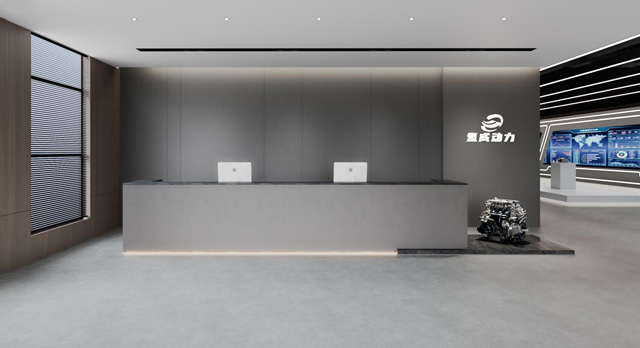
AboutQingcheng Power Technology(Luoyang) Co.,Ltd. is jointly established by Luoyang New Energy Investment and Development Group Co., Ltd., Haizhuo Power (Qingdao) Energy Technology Co., Ltd., Chengdu Yiyi New Energy Automobile Co., Ltd., and Nanjing Hydrogen Maple Technology Partnership (Limited Partnership).
-
ProductsThe company mainly focuses on two major sectors: fuel cell systems, power cells, and energy storage batteries, and is committed to providing leading solutions for hydrogen fuel cell systems and power cell energy storage syste

-
NewsBy giving full play to the advantages of each shareholder to lay the foundation for the sustainable development of the project company, we will develop new product types with more enthusiasm and strong internal management, improve the performance indicators of existing products, and truly let you rest assured.

-
TechnicalThe company's core team has more than 20 years of experience in the field of new energy. It has deep technical reserves in the development of fuel cell systems, engineering services and power storage battery research and development. 1 2 N business system.


News
Committed to providing hydrogen fuel cell systems and power battery energy storage system application solutions
Energy Storage News: Tracking Industry Hotspots!
Release time:
2026-07-06
Source:
On July 1, 2026, the National Energy Administration released the “China Power Supply Development Report (2026),” which noted that local authorities are actively exploring innovative ways for new market participants—such as virtual power plants and advanced energy storage systems—to engage in the electricity market, leveraging market mechanisms to develop stable business models for emerging sectors. By the end of 2025, the country had 470 virtual power plant projects, an increase of nearly 200 compared with the previous year; tested maximum regulation capacity reached 16.85 million kilowatts, up approximately 70% year on year. Meanwhile, the installed capacity of newly commissioned advanced energy storage facilities totaled 136 million kilowatts/351 million kilowatt-hours, more than 40 times the level at the end of the 13th Five-Year Plan period. Electricity pricing reforms continue to deepen. At the transmission and distribution level, a comprehensive tariff framework has been established nationwide, covering provincial grid transmission and distribution tariffs, regional grid transmission prices, transmission tariffs for inter‑provincial and inter‑regional special projects, as well as distribution tariffs for local grids and incremental distribution networks, thereby laying the groundwork for electricity market trading. At the retail level, catalog tariffs for industrial and commercial users have been completely abolished, with all such consumers now participating in the electricity market; a unified national electricity market has been preliminarily put in place. Power supply companies provide proxy purchasing services to industrial and commercial users who do not directly participate in the market, with annual proxy procurement reaching 1.69 trillion kilowatt-hours. As of the end of 2025, the total number of electricity users nationwide stood at 783.67 million, including 777.31 million low‑voltage customers and 6.36 million high‑voltage customers.

National policy
01 The National Energy Administration has released the “China Power Supply Development Report (2026).”
On July 1, 2026, the National Energy Administration released the “China Power Supply Development Report (2026),” which noted that local authorities have been actively exploring innovative ways for new market participants—such as virtual power plants and advanced energy storage systems—to engage in the electricity market, leveraging market mechanisms to develop stable business models for emerging sectors. By the end of 2025, the country had 470 virtual power plant projects, nearly 200 more than the previous year; tested maximum regulation capacity reached 16.85 million kilowatts, up roughly 70% year on year. Meanwhile, the installed capacity of commissioned advanced energy storage facilities totaled 136 million kilowatts/351 million kilowatt-hours, an increase of over 40-fold compared with the end of the 13th Five-Year Plan period. Electricity pricing reforms continued to deepen. At the transmission and distribution level, a comprehensive tariff system has taken shape, covering provincial grid transmission and distribution tariffs, regional grid transmission prices, transmission tariffs for inter‑provincial and inter‑regional special‑purpose projects, as well as distribution tariffs for local grids and incremental distribution networks, thereby laying the groundwork for electricity market trading. On the consumption side, catalog tariffs for industrial and commercial users were fully abolished, with all such customers now participating in the electricity market; a preliminary nationwide unified electricity market has thus been established. Power supply companies provide proxy purchasing services to industrial and commercial users who do not directly participate in the market, with annual proxy procurement reaching 1.69 trillion kilowatt-hours. As of the end of 2025, the total number of electricity users nationwide stood at 783.67 million, including 777.31 million low‑voltage users and 6.36 million high‑voltage users.
Local Policies and Key News
01 The Jilin Provincial Development and Reform Commission, the Jilin Provincial Department of Industry and Information Technology, and the Jilin Provincial Energy Administration jointly issued the “List of Provincial-Level Zero-Carbon Parks in Jilin Province (First Batch).”
On June 18, the Jilin Provincial Development and Reform Commission, the Jilin Provincial Department of Industry and Information Technology, and the Jilin Provincial Energy Administration jointly issued the “List of Provincial-Level Zero-Carbon Parks in Jilin Province (First Batch),” which includes a total of 10 parks. Local authorities are expected to proactively support the development of provincial-level zero-carbon parks by providing assistance in areas such as funding allocation, resource guarantees, technical support, and financial services, and by promoting green‑power direct‑supply models—such as direct green‑power connections and the local integration of new energy into incremental distribution networks—within these parks. In addition, relevant departments are to work together to closely monitor and coordinate progress in the construction of provincial-level zero‑carbon parks, and upon completion of the designated construction period, promptly organize acceptance and evaluation procedures. Parks that pass these assessments will be submitted to the Provincial Development and Reform Commission for formal approval, after which they will be officially recognized as provincial-level zero‑carbon parks.
02 The Henan Energy Supervision Office and the Henan Development and Reform Commission have issued the “Detailed Rules for the Operation of the Medium- and Long-Term Electricity Market in Henan Province.”
Recently, the Henan Energy Regulatory Office and the Henan Development and Reform Commission issued the “Detailed Rules for the Operation of the Medium- and Long-Term Electricity Market in Henan Province.” According to these rules, new market participants—including distributed photovoltaic systems, distributed wind power, energy storage facilities, virtual power plants, and smart microgrids—may all take part in Henan’s medium- and long-term electricity market. Specifically, distributed renewable energy sources such as distributed photovoltaic and distributed wind power may either participate directly in the medium- and long-term market or opt to have their participation represented by resource‑aggregating entities. The rules stipulate that intra‑provincial medium- and long-term transactions—including those conducted through grid‑enterprise‑led procurement—must adopt curve‑based contract signing and time‑segmented settlement. The trading products in the medium- and long-term market are divided into 24 hourly segments based on a 24‑hour day, with time‑specific curves derived from the trading process. Efforts will be gradually advanced to align the time‑segmented structure of medium- and long-term electricity contracts with that of the spot market.
03 The Hainan Provincial Development and Reform Commission recently issued the “Notice on Matters Related to Promoting the High-Quality Development of Grid-Side Independent New Energy Storage in Our Province.”
On June 30, the Hainan Provincial Development and Reform Commission recently issued the “Notice on Matters Related to Promoting the High-Quality Development of Grid-Side Independent New-Type Energy Storage in Our Province.” The notice clarifies that the new regulations apply to independent new-type energy storage projects that directly support the safe operation of the power system and are not built as ancillary facilities to renewable energy projects. For existing energy storage systems co‑located with renewable energy projects, provided they have undergone technical upgrades and meet the technical requirements and safety standards for independent energy storage, they may be converted into grid‑side independent storage to enhance equipment utilization efficiency. However, such converted projects will explicitly be excluded from subsequent capacity‑tariff compensation, thereby distinguishing the priority of policy support.
04 The Energy Administration of the Inner Mongolia Autonomous Region has issued the “Notice on Re‑initiating the Submission of Applications for the 2026 List of Independent New‑Type Energy Storage Projects.”
Recently, the Energy Administration of the Inner Mongolia Autonomous Region issued the “Notice on Re‑initiating the Submission of the 2026 List of Independent New‑Type Energy Storage Projects.” The energy authorities of all leagues and cities are required to submit their respective regional lists of new‑type energy storage projects to the Autonomous Region’s Energy Administration by July 20, 2026. In principle, the installed capacity of each individual energy storage power station shall not be less than 200 MW/800 MWh, and its grid‑connection voltage level shall, in principle, not exceed 220 kV. Leagues and cities are encouraged to plan and submit applications for independent new‑type energy storage projects featuring long‑duration storage (4–8 hours). Projects included in the Autonomous Region’s list of independent new‑type energy storage projects must be completed in a single phase; the scale (duration) of the energy storage facilities may not be arbitrarily divided, nor may construction be carried out in stages.
05 The Sichuan Provincial Development and Reform Commission has issued a notice clarifying relevant matters concerning the price policy for local consumption of new energy in Sichuan Province.
On June 29, the Sichuan Provincial Development and Reform Commission issued a notice (Sichuan NDRC Price [2026] No. 250) clarifying relevant matters concerning the price policy for local consumption of new energy in Sichuan Province. The document specifies that “local consumption” projects refer to initiatives in which power sources, loads, and energy storage systems are integrated as a unified entity connected to the Sichuan public grid, establishing clear physical and safety‑responsibility interfaces, with new‑energy generation serving as the primary power source. For such projects, the power source must be connected on the user side at the demarcation point between the user and the public grid; the annual self‑generated and self‑consumed portion of new‑energy output must account for no less than 60% of total available generation and no less than 30% of total electricity consumption, rising to at least 35% for new projects starting in 2030. Furthermore, these projects must meet the requirements for separate metering, with the grid enterprise installing metering devices at key points—such as generation, plant‑use electricity, grid connection, self‑generation and self‑consumption, and energy storage—to accurately record electricity flow data at each stage. Regarding pricing, in accordance with the principle of “beneficiary pays,” local consumption projects shall fairly bear transmission and distribution charges, system operation fees, and other costs associated with the stable supply services provided by the power system. Projects not connected to the public grid are exempt from paying stable‑supply guarantee fees.
06 The Central China Regulatory Bureau of the National Energy Administration has issued a notice soliciting public comments on the “Jiangxi Province Electricity Market Rules (Trial Version 5.0) (Draft for Comments).”
On June 26, the Central China Regulatory Bureau of the National Energy Administration issued a notice soliciting public comments on the “Jiangxi Province Electricity Market Rules (Trial Version 5.0) (Draft for Comments).” Key highlights of the notice are as follows: In the medium- and long-term electricity market, transaction prices shall be determined through market mechanisms. For market participants engaging directly in trading, no artificial time-of-use price levels or time periods will be prescribed. In the day-ahead and real-time electricity markets, renewable energy generators will, for the time being, submit bids, undergo clearing, and settle transactions on a per‑plant basis (with one step-up substation corresponding to one plant), while efforts will be accelerated to enable renewables to participate in the real-time market on a project‑by‑project basis. Independent advanced energy storage systems and energy storage facilities co‑located with renewable energy plants may independently declare their charge/discharge schedules and participate in the real-time market under a “quantity‑only, no‑price‑bid” approach. As the market continues to evolve, energy storage will gradually transition to participating in the real-time market with both quantity and price bids. Independent advanced energy storage systems may simultaneously participate in, or choose to participate exclusively in, either the real-time market or the frequency‑regulation ancillary services market. The day-ahead market operates on a model of quantity and price bidding by both generation and consumption sides, followed by centralized auction‑based clearing; participation in the day-ahead market is voluntary for both renewable energy producers and consumers. For renewable energy plants—including those with on‑site co‑located storage—the final clearing results comprise both the cleared output values of the plant’s wind turbines or photovoltaic inverters and the cleared output values of the on‑site storage system.
07 The Hainan Electricity Trading Center has issued a notice on the promulgation of the “Detailed Rules for the Operation of the Hainan Medium- and Long-Term Electricity Market (Version 1.0, 2026).”
It is stated that all electricity consumed by users directly participating in Hainan’s medium- and long-term power market may be procured either through the wholesale market or the retail market, but such users may not simultaneously participate in both markets. For users who have not yet directly participated in Hainan’s medium- and long-term power market, grid enterprises shall, in accordance with regulations, act as their agents for electricity procurement; these users are permitted to opt, starting from the following month, to directly engage in either the wholesale market or the retail market.
Hainan’s medium- and long-term electricity market transactions, aligned with the actual conditions of the Hainan power market, have established various types of intra-provincial medium- and long-term trading products, which are then shared with the Guangzhou Electricity Trading Center. The Guangzhou Electricity Trading Center subsequently incorporates these into the Southern Regional Power Market’s medium- and long-term trading product catalog. At this stage, medium- and long-term electricity trading encompasses intra-provincial direct trading and grid‑enterprise‑agency‑purchasing transactions. Specifically:
(1) In-province medium- and long-term direct transactions are direct trading arrangements conducted by market participants through centralized auctions and bilateral negotiation (including green electricity trading, hereinafter referred to as “green electricity trading”). Green electricity trading refers to a type of electricity transaction whose underlying asset is green electricity together with the corresponding environmental value of that green electricity (hereinafter referred to as “green electricity environmental value”), with the traded electricity simultaneously accompanied by a renewable‑energy green electricity certificate issued by the state (hereinafter referred to as “green certificate”). In-province green electricity trading refers to transactions in which electricity users or power sales companies, among others, purchase green electricity directly from generation enterprises within the grid control area of the province.
(2) For electricity volume procured on behalf of industrial and commercial users who have neither yet purchased electricity directly from the power market nor participated in power market transactions before withdrawing, the grid enterprise shall participate in power market procurement through centralized on‑exchange trading.
(3) Unfulfilled contracts may be assigned, in whole or in part, to a third party through contract‑transfer transactions, with all associated rights and obligations transferred concurrently. Any transfer of green‑power contracts shall require the unanimous agreement of all relevant parties.
For market‑participating entities, no artificial caps or floor levels will be imposed on time‑of‑use electricity prices or on the allocation of pricing periods. For users served by grid‑based retail electricity procurement, the government pricing authority will, based on spot‑market price conditions, comprehensively optimize the delineation of peak and off‑peak periods and the corresponding price‑fluctuation ratios.
Information and Perspectives
01 The China Electricity Council has released the “2026 Report on the Development of the Electrochemical Energy Storage Industry.”
According to data released by the National Energy Administration, new‑type energy storage will maintain a rapid growth trajectory in 2025, with installed capacity exceeding 100 GW. Meanwhile, statistics from the China Electricity Council show that, as of the end of 2025, a total of 1,998 electrochemical energy‑storage power stations had been commissioned, with combined installed capacity of 109.29 GW and total storage capacity of 276.22 GWh. Regionally, all 20 provinces have cumulative installed capacities surpassing 1 GW; among them, Inner Mongolia and Xinjiang each exceed 15 GW, while Shandong, Jiangsu, Ningxia, Hebei, Gansu, Yunnan, and Guangdong have surpassed 5 GW. In terms of application scenarios, standalone energy storage and renewable‑energy‑plus‑storage account for over 95% of the total. Regarding storage duration, long‑duration projects are on the rise: 2‑hour systems represent 52.71% of total commissioned capacity, while 4‑hour and longer systems account for 45.36%, an increase of 15 percentage points year over year. By plant size, new installations in 2025 will predominantly be large‑scale facilities of 100 MW or above, collectively accounting for 81.18% of total installed capacity. At the same time, GWh‑scale electrochemical energy‑storage projects in Inner Mongolia, Xinjiang, Gansu, and other regions are being brought online, signaling that single electrochemical storage plants are entering the “GWh era.” With respect to grid‑connection voltage levels, the majority of commissioned electrochemical energy‑storage stations operate at 220 kV or higher, totaling 63.69 GW and representing 58.27% of the overall installed capacity. For detailed insights into regional trends, application scenarios, storage durations, plant sizes, grid‑connection voltage levels, and other aspects of current development, please refer to the full report.
02 Germany, Italy, and the United Kingdom have all deployed energy storage systems exceeding 10 GW.
According to the 10th edition of the European Market Monitor for Energy Storage (EMMES), jointly published by the European Association for Storage of Energy and the energy transition consultancy LCP Delta, by the second quarter of 2026, Europe’s cumulative installed capacity of deployed energy storage systems will have surpassed that of nuclear power facilities. In 2025, Europe deployed a record‑breaking 13.5 GW/26.4 GWh of energy storage capacity; by the third quarter of 2025, the combined installed capacity of residential, commercial & industrial (C&I), and grid‑scale (utility‑level) energy storage systems had exceeded 100 GW.
Key words:
Recommended News
Contact
Address: Chanhe Innovation Technology Park, No. 2 Zhenxing Road, Chanhe Hui District, Luoyang City, Henan Province
Tel:0379-63869669
Mailbox:info@hydromobility.cn
Scan

Copyright©2023 Qingcheng Power Technology(Luoyang) Co.,Ltd. This website supports ipv6
 豫公网安备41030402000254号
Copyright©2023 Qingcheng Power Technology(Luoyang) Co.,Ltd.
This website supports ipv6