

-
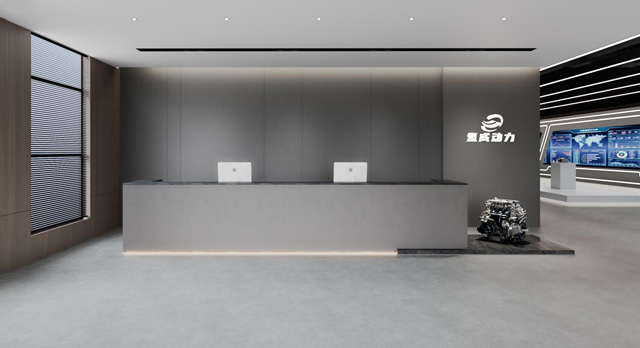
AboutQingcheng Power Technology(Luoyang) Co.,Ltd. is jointly established by Luoyang New Energy Investment and Development Group Co., Ltd., Haizhuo Power (Qingdao) Energy Technology Co., Ltd., Chengdu Yiyi New Energy Automobile Co., Ltd., and Nanjing Hydrogen Maple Technology Partnership (Limited Partnership).
-
ProductsThe company mainly focuses on two major sectors: fuel cell systems, power cells, and energy storage batteries, and is committed to providing leading solutions for hydrogen fuel cell systems and power cell energy storage syste

-
NewsBy giving full play to the advantages of each shareholder to lay the foundation for the sustainable development of the project company, we will develop new product types with more enthusiasm and strong internal management, improve the performance indicators of existing products, and truly let you rest assured.

-
TechnicalThe company's core team has more than 20 years of experience in the field of new energy. It has deep technical reserves in the development of fuel cell systems, engineering services and power storage battery research and development. 1 2 N business system.


News
Committed to providing hydrogen fuel cell systems and power battery energy storage system application solutions
50% non-fossil energy and 300 million kilowatts of energy storage: What signals does the “15th Five-Year Plan” for building a new-type power system send?
Release time:
2026-08-05
Source:
In August 2026, the “15th Five-Year Plan” for Building a New-Type Power System was released. This document sets out the blueprint for China’s power system by 2030.
In August 2026, the “15th Five-Year Plan” for Building a New-Type Power System was released. This document sets out the blueprint for China’s power system by 2030.
Three key figures deserve attention: non‑fossil‑fuel power generation will account for 50% of the total; installed capacity of advanced energy storage will reach 300 million kilowatts; and charging infrastructure will exceed 40 million units.

Six Key Highlights
01 New energy shifts from “extensive expansion” to “refined management”
For the first time, utilization‑rate targets have been set across three tiers—95%, 90%, and 85%—eliminating the blind pursuit of 100% consumption. The three major strategic fronts—large-scale “sand‑desert‑wasteland” bases, integrated water‑wind‑solar projects, and offshore wind power—are being advanced in parallel.
02 Major Realignment of the Coal-Power Sector’s Role
Shifting from “primary power sources” to “supporting and regulating power sources,” existing generating units should undergo flexibility upgrades wherever feasible, with minimum output reduced to below 40%, thereby paving the way for new energy while ensuring reliable supply.
03 Distribution Grid Elevated to Strategic Priority
Support the integration of 900 million kilowatts of distributed renewable energy, address power supply shortcomings in older residential areas, and strive to eliminate the risk of total grid outages at the county level on a single transmission line.
04 Explosive Growth of Virtual Power Plants
The grid’s regulation capacity has surged from 16.85 million kilowatts to over 50 million kilowatts. With the large-scale deployment of bidirectional charging and discharging for electric vehicles, owners can sell electricity back to the grid during peak periods to earn revenue.
05 Full Deployment of New Energy Storage Technologies
Shifting from “built but not used” to “full-scale deployment,” by 2030 the capacity will reach 300 million kilowatts, with 140 million kilowatts capable of meeting peak demand and ensuring supply.
06 In-depth advancement of electricity market reform
The spot market has been fully rolled out, capacity markets are being explored, and time-of-use pricing for residential consumers is being promoted.
Four Major Changes That Affect You and Me
01 Charging is no longer difficult: By 2030, the number of charging infrastructure units will exceed 40 million, with public charging facilities in rural counties and townships achieving full coverage—except in island areas and high‑altitude, cold regions. Charging facilities at highway service areas will be upgraded and renovated, and approximately 300,000 high‑power charging stations will be deployed.
02 Power outages are becoming increasingly rare: By 2030, the national average power supply reliability for urban customers will increase to 99.99% (compared with 99.982% in 2025).
03 Using Electricity More Smartly: Promote time-of-use electricity pricing for residential consumers, refine the time-of-use tariff mechanism for charging stations, and establish a sound pricing framework for vehicle-to-grid (V2G) discharging. By 2030, bidirectional charging and discharging will be deployed on a large scale, with the aggregated adjustable charging capacity under vehicle‑grid interaction aiming to reach 50 million kilowatts.
04 Easier Electricity Services: Deepen the “save effort, save time, save money” service model and consolidate and enhance the “zero in-person visits, zero approvals, zero investment” service. Fully advance the “efficiently get one thing done” initiative, deepen integrated application services for water, electricity, and gas connections, and promote cross‑network and cross‑province remote electricity‑service options.
Conclusion
Amid the wave of the energy transition, Hydrogen Power Technology (Luoyang) Co., Ltd. is leveraging technological innovation to drive a green future. Founded in 2022 and backed by Luoyang New Energy Technology Development Group Co., Ltd., the company has been recognized as a national high-tech enterprise. Its business encompasses the R&D, manufacturing, and sales of energy storage cabinets, lithium‑battery power systems, and battery management systems (BMS), as well as the provision of specialized solutions for converting non‑road mobile equipment from fuel to electric power.
The core functions of the energy storage cabinets we develop and manufacture align with the government’s strong advocacy for peak‑shaving and valley‑filling, reducing electricity costs, and enhancing the stability and reliability of power supply. If you have needs related to energy storage systems, charging infrastructure, or power engineering projects, please send us a message via our official WeChat account, and we will arrange for a technical consultant to connect with you.
Key words:
Previous
Recommended News
Contact
Address: Chanhe Innovation Technology Park, No. 2 Zhenxing Road, Chanhe Hui District, Luoyang City, Henan Province
Tel:0379-63869669
Mailbox:info@hydromobility.cn
Scan

Copyright©2023 Qingcheng Power Technology(Luoyang) Co.,Ltd. This website supports ipv6
 豫公网安备41030402000254号
Copyright©2023 Qingcheng Power Technology(Luoyang) Co.,Ltd.
This website supports ipv6