

-
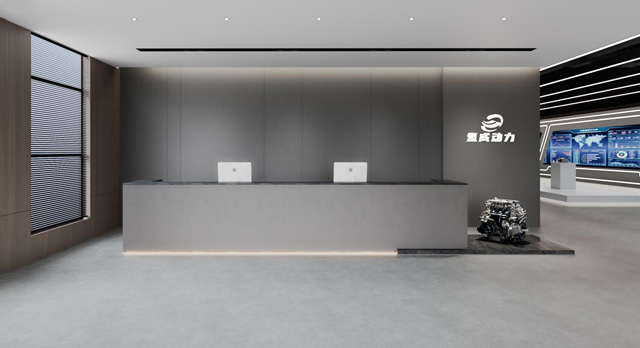
AboutQingcheng Power Technology(Luoyang) Co.,Ltd. is jointly established by Luoyang New Energy Investment and Development Group Co., Ltd., Haizhuo Power (Qingdao) Energy Technology Co., Ltd., Chengdu Yiyi New Energy Automobile Co., Ltd., and Nanjing Hydrogen Maple Technology Partnership (Limited Partnership).
-
ProductsThe company mainly focuses on two major sectors: fuel cell systems, power cells, and energy storage batteries, and is committed to providing leading solutions for hydrogen fuel cell systems and power cell energy storage syste

-
NewsBy giving full play to the advantages of each shareholder to lay the foundation for the sustainable development of the project company, we will develop new product types with more enthusiasm and strong internal management, improve the performance indicators of existing products, and truly let you rest assured.

-
TechnicalThe company's core team has more than 20 years of experience in the field of new energy. It has deep technical reserves in the development of fuel cell systems, engineering services and power storage battery research and development. 1 2 N business system.


News
Committed to providing hydrogen fuel cell systems and power battery energy storage system application solutions
Energy Storage News: Tracking Industry Hotspots!
Release time:
2026-03-09
Source:
At 9:00 a.m. on March 5, the Fourth Session of the 14th National People’s Congress held its opening meeting at the Great Hall of the People. Premier Li Qiang, on behalf of the State Council, delivered the Report on the Work of the Government to the Fourth Session of the 14th National People’s Congress.

National Policies and Major News
At 9:00 a.m. on March 5, the Fourth Session of the 14th National People’s Congress held its opening meeting at the Great Hall of the People. Premier Li Qiang, on behalf of the State Council, delivered the Report on the Work of the Government to the Fourth Session of the 14th National People’s Congress.
In his report on the work of the government, Premier Li Qiang stated that by 2026, carbon dioxide emissions per unit of GDP will be reduced by around 3.8%. This target takes into full consideration various needs, including economic and social development, the green and low‑carbon transition, and national energy security, and will help to achieve the goal of peaking carbon emissions before 2030 in an orderly manner.
Vigorously develop a green, low‑carbon economy. Improve policies that promote green and low‑carbon development, implement initiatives to enhance quality, reduce costs, and cut carbon emissions in key industries, and deepen the development of zero‑carbon parks and factories. Establish a National Low‑Carbon Transition Fund and foster new growth drivers such as hydrogen energy and green fuels. Effectively and rigorously manage high‑energy‑consumption, high‑emission projects, accelerate the phasing out of outdated production capacity, and support the innovative application of green and low‑carbon technologies and equipment. Enhance total resource management and comprehensively promote conservation, while strengthening the recycling and reuse of renewable resources.
Actively yet prudently advance carbon peaking and carbon neutrality. Implement a dual control system for total carbon emissions and carbon intensity, improve carbon emission statistics and accounting as well as the carbon footprint management system, and further expand the coverage of the carbon emissions trading market. Formulate an outline for building a strong energy nation. Focus on developing a new type of power system, accelerate the construction of smart grids, promote the development of new energy storage technologies, and broaden the application of green electricity. Strengthen the clean and efficient utilization of fossil energy.
In his Government Work Report, Premier Li Qiang stated that over the past year, China accelerated the green and low‑carbon transformation of key industries. The first batch of “Shaguo Huang” new energy base projects have been basically completed and put into operation, with installed capacity for new energy storage exceeding 130 million kilowatts, and the share of non‑fossil energy consumption reaching 21.7%. China announced its Nationally Determined Contributions target for addressing climate change by 2035, fully demonstrating its commitment as a responsible major country. In his Government Work Report, Premier Li Qiang explained that, in accordance with the “Suggestions of the CPC Central Committee on Formulating the 15th Five‑Year Plan for National Economic and Social Development,” the State Council has prepared the “Draft Outline of the 15th Five‑Year Plan for National Economic and Social Development of the People’s Republic of China” and submitted it to the Congress for review.
The main target indicators include: In the area of green and low-carbon development, five indicators are proposed, focusing on carbon reduction, pollution mitigation, and ecological conservation. Among these, in line with the Nationally Determined Contributions targets, a cumulative 17% reduction in carbon dioxide emissions per unit of GDP is set forth, while continued efforts will be made to promote green and low‑carbon transformation in key sectors.
The document outlines major strategic tasks: With a focus on building a Beautiful China, we will continue to deepen efforts to tackle pollution and optimize ecosystems, accelerate the development of green production and lifestyle patterns, and ensure that the carbon peak target is achieved as scheduled.
In major engineering projects, it is proposed to build a modern infrastructure system by launching 23 projects centered on the national comprehensive, three‑dimensional transportation network, a new energy system, new infrastructure, and platforms for opening up to the outside world. To promote a green and low‑carbon transition, 18 projects are proposed, focusing on peaking carbon emissions and achieving carbon neutrality, improving environmental quality, and carrying out ecological conservation and restoration.
On February 28, 2026, State Grid released ten initiatives to support the high‑quality development of new energy, proposing to proactively facilitate the orderly entry into the market and scientific development of various new business models and new entities, such as direct green power trading and integrated source–grid–load–storage systems. These initiatives will help ensure the timely completion of the first batch of 40 zero‑carbon parks within its operating area, as well as subsequent national and local pilot projects.
Strengthen the dispatch and operation of new energy power plants and energy storage facilities, leverage source–load interaction and resource mutual assistance, and ensure that new energy is “generated to the fullest extent possible.”
Support the effective monitoring and statistical analysis of renewable energy consumption, as well as the calculation of weighting factors; promote hour‑by‑hour green electricity trading for new energy sources; enhance the quality and efficiency of green certificate coverage services; and meet the green electricity needs of various enterprises.
Accelerate the research, development, and application of long-duration energy storage technologies, innovate load aggregation and regulation techniques, enhance the digitalization and intelligentization of the power grid, improve the technical standards system, and support the safe and efficient development of new energy sources.
Local Policies and Top News
On March 3, 2026, the People’s Government of Qinghai Province issued the “Several Measures of Qinghai Province for Promoting the Large-Scale Development of Concentrated Solar Power,” which stipulates that for incremental standalone CSP projects included in development and construction plans, support will be provided for these projects to independently participate in mechanism-based electricity price auctions one year prior to their scheduled completion date. Taking into account factors such as enterprises’ overall returns and the value of green electricity, the auction ceiling will be set reasonably, while the auction floor will be no lower than the cost of CSP projects. The auction floor will be gradually and moderately reduced annually from 0.55 yuan/kWh, eventually reaching a level roughly equivalent to that of coal-fired power by 2030.
Optimize and refine the method for assessing the reliable capacity of concentrating solar power plants, and provide capacity compensation for capacity beyond the mechanism-based electricity price.
Encourage and support concentrating solar power (CSP) projects to actively participate in various electricity market transactions, establishing a diversified revenue structure that is underpinned by medium- and long‑term trading, supplemented by spot trading, and enhanced by ancillary services markets. Support participation in ancillary services such as peak shaving, frequency regulation, and reserve capacity, thereby promoting the full realization of CSP’s supporting and regulating value and driving improvements in the overall economic viability of these projects.
02 The Yunnan Provincial Development and Reform Commission has issued the “Several Measures to Promote the Consumption of Green Electricity in Yunnan Province.”
On February 28, 2026, the Yunnan Provincial Development and Reform Commission issued the “Several Measures to Promote the Consumption of Green Electricity in Yunnan Province.” The document proposes: Continuously advancing the development of new energy storage. Focus will be placed on key grid nodes and regions where new energy is abundant but faces significant challenges in transmission and consumption. While taking into account the diverse application needs of new energy storage across multiple scenarios, new shared energy storage facilities should be strategically deployed based on local conditions. In principle, newly built shared energy storage projects must adopt grid-forming energy storage technology. Small and medium-sized enterprises are encouraged to purchase “energy storage services.” The development of virtual power plants and load aggregators will be promoted, and all prefectures (cities) will be supported in accelerating the construction of virtual power plants.
At the meeting, Wei Xin, Vice Governor of Chuxiong Prefecture, stated that the focus will be on deploying and constructing grid‑oriented shared energy storage projects at key grid nodes—such as the 500 kV Guanghui Substation, Lucheng Substation, and Heping Substation—where there is significant pressure to transmit, deliver, and absorb new energy. This initiative will support the diversified, multi‑scenario development of new energy storage tailored to local conditions.
Wei Xin, Member of the Standing Committee of the Chuxiong Prefecture Party Committee of the CPC and Vice Governor of the Chuxiong Prefectural People’s Government, stated that in recent years, Chuxiong Prefecture has earnestly implemented the “3815” strategy. With the care and support of the Provincial Development and Reform Commission, the Provincial Department of Industry and Information Technology, and the Provincial Energy Administration, Chuxiong has actively seized the opportunities presented by green energy development, proactively planned ahead, pooled resources and efforts to promote the development of industries centered on wind power, photovoltaic power, and energy storage, and achieved remarkable results.
First, we must fully leverage our abundant solar and wind resources. Chuxiong Prefecture is located in a region with high levels of solar irradiance and favorable wind conditions; both solar and wind power generation boast annual utilization hours that exceed the national average. To date, the prefecture has been approved to develop new energy installations with a total capacity of 19.24 million kilowatts, ranking first in the entire province. By 2025, green energy will account for 97.4% of the prefecture’s total electricity generation.
Second, we are vigorously promoting the integrated development of green energy and green manufacturing. Leaning on our abundant green energy resources, we have seized the opportunity presented by the province’s concentrated new energy development phase, vigorously expanding industries such as green silicon, copper, titanium, vanadium, as well as new energy and energy storage equipment manufacturing. We have attracted high‑quality enterprises including Longi, Jinko, Yuzhe, Yunda, Envision, and Yuanxin, making us the first prefecture (city) in the province to simultaneously possess production capabilities for monocrystalline silicon ingot pulling, wafer slicing, and solar cell fabrication. We are also the first prefecture (city) in Yunnan Province to put into operation a lithium‑battery energy storage equipment manufacturing project. The green manufacturing industrial chain across the entire prefecture continues to expand, industrial electricity consumption is steadily increasing, and the new energy equipment manufacturing industry has formed an upstream–downstream integrated development model with new energy power stations.
Third, we are actively exploring ways to facilitate local consumption of green energy. As the installed capacity of green energy continues to expand rapidly, we place great emphasis on coordinated development between power generation and load, and are proactively seeking innovative approaches to harness and utilize new energy sources close to their points of generation. Taking advantage of the introduction of the direct‑power‑to‑green‑energy policy, we have carefully planned and tailored our efforts to vigorously promote “Green Power + Computing Power Center” projects in areas such as Chuxiong City and Dayao County. The Chuxiong–Dayao Green Power Direct‑Connection Project has been included in the first batch of green power direct‑connection projects for Yunnan Province in 2025, making it one of the province’s initial four pilot projects—and we are accelerating its implementation.
The first priority is to make comprehensive efforts to transform the advantages of green electricity into competitive advantages for industrial development. Centered on the “3+8+6” new industrialization framework, we will leverage the appeal of green electricity as a core attraction for investment promotion. Focusing on sectors such as green aluminum, new energy batteries, nonferrous metals—including rare and precious metals—data centers, and hydrogen energy, we will precisely target and attract investment along the industrial chain. We will bring in a batch of projects that extend, supplement, and strengthen existing chains, as well as export-oriented enterprises with stringent carbon reduction requirements, to establish operations in the region. Through incentive measures, we will encourage industrial enterprises to reach full production capacity and expand their output, thereby creating a virtuous cycle where “green electricity drives enterprise development within industrial parks, while park loads support the consumption of green electricity.” In this way, green energy will inject fresh vitality and new momentum into industrial development.
The second focus is on prioritizing key areas and striving to establish a demonstration model for the integrated development of “green electricity + advanced manufacturing.” We will make full use of relevant policies and measures, further leverage our resource advantages and locational strengths, and promote the diversified application of green electricity across multiple scenarios. First, we will accelerate the commencement and commissioning of direct‑grid connection projects for green electricity, aiming to achieve a breakthrough in zero direct‑grid connection for green electricity—leading the entire province in this regard. Second, we will place particular emphasis on advancing the application of “green electricity + hydrogen, ammonia, and alcohols.” By capitalizing on policy‑driven mechanisms for grid‑connected power generation and incentive schemes, we will expedite the preliminary work on the Chuxiong High‑Tech Zone’s integrated wind–solar green hydrogen and ammonia project, with the goal of breaking ground within this year and completing construction and putting the project into operation concurrently with the natural gas–fired power generation project. Once completed, the project is expected to achieve an annual green hydrogen production capacity of 9,000 tons and an annual green ammonia production capacity of 50,000 tons. Through policy guidance, we will effectively boost corporate investment enthusiasm, accelerate breakthroughs in “green electricity + computing power” and “green electricity + hydrogen, ammonia, and alcohols” projects, and create provincial-level demonstration models.
The third aspect is to consolidate the foundations and strengthen capacity building for grid regulation, thereby ensuring the efficient integration of new energy. In line with the clearly defined policy direction, we will accelerate the development of new energy storage, virtual power plants, and charging/swapping infrastructure, continuously enhancing the power system’s regulatory capabilities to support and facilitate the consumption of new energy. Our focus will be on deploying and constructing grid‑forming shared energy storage projects at key grid nodes—such as the 500 kV Guanghui Substation, Lucheng Substation, and Heping Substation—where pressure on new energy transmission and consumption is particularly high, while also supporting the diversified, multi‑scenario development of new energy storage tailored to local conditions.
03 The Shandong Provincial Development and Reform Commission has issued the “Notice on Implementing Document No. 1192 of the National Development and Reform Commission’s Price Department [2025] and Further Clarifying Relevant Matters Concerning Price Policies for Local Consumption of New Energy (Draft for Comments).”
New energy projects that consume power locally shall pay transmission and distribution fees based on their contracted (required) capacity. Monthly contracted (required) capacity charges = contracted (required) capacity charges paid under current policies + the prevailing electricity tariff for the relevant voltage level × average load factor × 730 hours × the capacity connected to the public grid. Other electricity pricing policies shall be implemented in accordance with the following provisions:
For the portion of electricity sold to the grid, the system reserve fee and electricity charges for transmission and distribution will no longer be levied. The on-grid (trading) electricity price, line loss costs in the on-grid segment, system operation costs, government‑imposed funds and surcharges, as well as other electricity pricing policies, shall be implemented in accordance with current regulations. For the time being, power factor adjustment of electricity charges will not be subject to assessment.
In principle, nearby consumption projects shall participate in the electricity market as a unified whole. The trading of power generated and fed into the grid, as well as price settlement, shall be conducted in accordance with the rules of the electricity market. When these projects consume electricity, they must directly engage in market transactions and may not have their power purchases handled by grid enterprises on their behalf.
04 The Jilin Provincial Energy Administration has issued the “Notice on Further Promoting High-Quality Development of Distributed Photovoltaic Power in Jilin Province.”
In terms of grid‑connected power generation, the policy adjustment raises the cap on the proportion of surplus electricity that can be sold back to the grid for general industrial and commercial projects from 20% to 50%. At the same time, existing projects are permitted to apply for changes to their grid‑connected power generation model based on load conditions, and large-scale industrial and commercial projects are encouraged to participate in day‑ahead electricity market trading. Regarding filing and registration management, emphasis is placed on ensuring the authenticity of submitted materials by investment entities, prohibiting centralized transfers of ownership to a single entity, and strengthening coordinated oversight between filing authorities and industry regulatory departments.
05 The People’s Government of Jiaozuo City has released the “Several Policies for Supporting the High-Quality Development of the New Energy Battery Industry in Jiaozuo City.”
It mentions that for key enterprises along the industrial chain that launch new full‑process production and manufacturing projects for new energy batteries, financial support will be provided in stages, up to 10% of the investment in productive equipment and installation works, in accordance with relevant regulations.
Coordinate the city’s wind power, photovoltaic, and other new energy resources, promote direct supply models such as green electricity direct supply and nearby access to incremental distribution networks, support enterprises in obtaining green electricity through market-based transactions and other means, and allocate green electricity quotas in a coordinated manner based on actual project construction and energy consumption. Encourage enterprises to develop new energy generation projects through self‑investment, cooperative development, and other approaches, thereby enhancing green electricity supply capacity and effectively reducing electricity costs.
In response to the development needs of the new energy industry, we will actively help enterprises expand their markets and support them in conducting technical exchanges and product promotion activities with potential users such as source–grid–load–storage projects, new energy vehicle manufacturers, and energy storage system integrators, thereby fostering precise matching across the upstream and downstream segments of the industrial chain.
Key words:
Previous Page:
Recommended News
Contact
Address: Chanhe Innovation Technology Park, No. 2 Zhenxing Road, Chanhe Hui District, Luoyang City, Henan Province
Tel:0379-63869669
Mailbox:info@hydromobility.cn
Scan

Copyright©2023 Qingcheng Power Technology(Luoyang) Co.,Ltd. This website supports ipv6
 豫公网安备41030402000254号
Copyright©2023 Qingcheng Power Technology(Luoyang) Co.,Ltd.
This website supports ipv6