

-
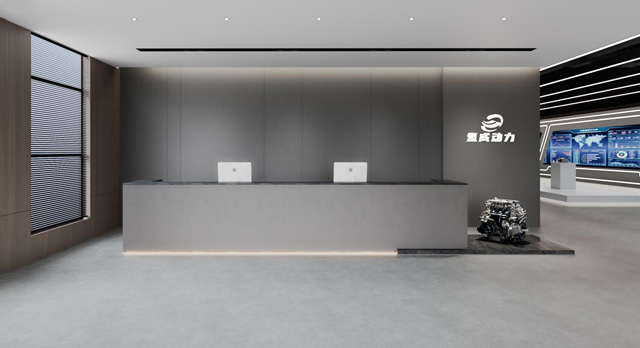
AboutQingcheng Power Technology(Luoyang) Co.,Ltd. is jointly established by Luoyang New Energy Investment and Development Group Co., Ltd., Haizhuo Power (Qingdao) Energy Technology Co., Ltd., Chengdu Yiyi New Energy Automobile Co., Ltd., and Nanjing Hydrogen Maple Technology Partnership (Limited Partnership).
-
ProductsThe company mainly focuses on two major sectors: fuel cell systems, power cells, and energy storage batteries, and is committed to providing leading solutions for hydrogen fuel cell systems and power cell energy storage syste

-
NewsBy giving full play to the advantages of each shareholder to lay the foundation for the sustainable development of the project company, we will develop new product types with more enthusiasm and strong internal management, improve the performance indicators of existing products, and truly let you rest assured.

-
TechnicalThe company's core team has more than 20 years of experience in the field of new energy. It has deep technical reserves in the development of fuel cell systems, engineering services and power storage battery research and development. 1 2 N business system.


News
Committed to providing hydrogen fuel cell systems and power battery energy storage system application solutions
Energy Storage News: Tracking Industry Hotspots!
Release time:
2026-03-02
Source:
On February 11, the General Office of the State Council issued the "Implementation Opinions on Improving the National Unified Electricity Market System." The document proposes establishing a capacity market that provides reliable support for the development of regulating power sources, further refining the capacity pricing mechanisms for regulating resources such as coal-fired power, pumped storage hydro, and new energy storage technologies, and studying the provision of compensation for system’s reliable capacity based on unified standards. Regions meeting the conditions are encouraged to explore forming capacity prices through competitive bidding, thereby ensuring long-term sufficient system reliability through market-based approaches.

National Policies and Top News
Local Policies and Top News

In accordance with the principle of “who benefits, who bears,” compensation costs for ancillary services provided to specific grid-connected entities on the generation side shall be shared by those respective generation-side grid-connected entities; compensation costs for ancillary services provided to specific electricity users shall be shared by those respective electricity users; and compensation costs for ancillary services provided to the overall operation of the power system shall be shared jointly by all grid-connected entities, including power generation enterprises and market-oriented electricity users. The inertia required shall be borne by new energy sources; in principle, the costs of other ancillary services shall be shared jointly by both generation-side and user-side grid-connected entities.

03 The Inner Mongolia Energy Administration has released the “2026 Revised Version of the Rules System for the Inner Mongolia Multi-party Electricity Trading Market (Draft for Comments)” and the “2026 Revised Version of the Rules System for the Eastern Mongolia Electricity Market (Draft for Comments).”
The “Implementation Rules for Spot Electricity Trading in the Inner Mongolia Power Multi-party Trading Market (Draft for Comments)” clearly states that, When the abundance of renewable energy falls below zero, new energy becomes abundant, leading to wind and solar power curtailment. Independent, newly established energy storage stations are prohibited from discharging electricity.
During periods of tight power supply, peak-shaving challenges, or difficulties in cross-section control, the power dispatching agency may, based on system operational needs, Independent new energy storage systems are required to participate via the “quantity reporting and price bidding” approach.
Active power regulation rate, with the unit being MW/minute. Provisionally set at 3.3% of the installed capacity. Adjusted according to the scale of the grid-connected energy storage power stations and the actual operation of the power grid.
State of charge refers to the ratio of the stored energy in an energy storage device to its rated capacity. The maximum allowable state of charge should be between 90% and 100% of the operator’s current state of charge, while the minimum allowable state of charge should be between 0% and 10% of the operator’s current state of charge.
The maximum number of charge-discharge cycles per day for an independent energy storage power station is 1.5, with a minimum continuous charge-discharge duration of 30 minutes. The station can fully charge its capacity no more than 1.5 times per day.
Taking into account factors such as marginal unit costs, electricity supply and demand conditions, and the green energy transition, The lower limit for bid prices in the spot market is -50 yuan/MWh, while the upper limit is 1,500 yuan/MWh. The clearing price in the spot market is 5.106 yuan/MWh.
Implementation Rules for Demand-Side Response Trading in the Inner Mongolia Electricity Multi-Party Trading Market (Draft for Comments) It was proposed that, in the demand-side response market recently, The minimum bid response price is 100 yuan/MWh, and the maximum is 1,500 yuan/MWh. In the early stage of the market, participating operators can submit only a single bid; later on, multi-round bidding will be introduced as appropriate.
In the following month’s emergency demand-side response capacity market, the minimum declared response capacity is 3 MW. The response price has a lower limit of 100 yuan/MWh and an upper limit of 3,000 yuan/MWh. In the early stage of the market, participating entities can only submit a single bid covering all time periods for the entire month; later on, multi-segment bidding will be gradually introduced as appropriate.
Operating Parameters for the Multilateral Electricity Market in Inner Mongolia (Trial) (Draft for Comments) Clearly, The guaranteed settlement price for new energy sources is 50 yuan per megawatt-hour; the environmental value of green electricity trading shall not be lower than 1 yuan per megawatt-hour, nor higher than 31.5 yuan per megawatt-hour.
Implementation Rules for Spot Trading in the Mengdong Electricity Market (Trial) (Draft for Soliciting Comments) It was mentioned that centralized new energy power stations, together with their integrated energy storage systems, will participate in the spot market in an integrated manner. Centralized new-energy power stations participate fully in the spot market by submitting both quantity and price bids. The actual charging and discharging periods of co-located energy storage systems are exempt from assessment.
New energy power stations, together with their accompanying energy storage systems that were invested in and constructed alongside them, shall participate in the spot market as a joint entity. When the accompanying energy storage system meets the following technical requirements after undergoing technological upgrades, It can voluntarily switch to independent energy storage operation and participate in the spot market as an independent energy storage entity. The corresponding plan will be formulated separately.
In terms of technical conditions, for the same installation location... Energy storage systems with a capacity of no less than 30,000 kilowatts to be co-located. On a voluntary basis, After the upgrade, the connected voltage level is 110 kV or higher. It possesses independent metering, control, and other technical capabilities, meets relevant standards and specifications as well as the requirements of power market operators and other relevant parties, and can be connected to the dispatch automation system for grid monitoring and dispatch. It can be converted into standalone energy storage. In principle, energy storage systems involved in integrated multi-energy complementary projects that combine wind, solar, hydro, thermal, and storage resources will not be converted into standalone energy storage for the time being.
Draft for Soliciting Comments on the Implementation Rules for Settlement in the Mengdong Electricity Market (Trial) In the early stage of the market, when independent energy storage systems participate simultaneously in both the medium- and long-term markets and the spot market, The spot settlement electricity price for the actual power output (or generation) of independent energy storage is the node price at the corresponding electrical node. For independently operated energy storage systems, the spot-market settlement price for actual charged (or used) electricity volume shall be the unified settlement price at the user-side across the entire grid, and such systems must participate in the allocation or reimbursement of various market operation cost items (excluding inter-provincial profit-and-loss expenses and congestion charges). When an independently operated energy storage system participates only in the spot market and not in the medium- and long-term markets, the spot-market settlement price for its actual discharged (or generated) and charged (or used) electricity volume shall be the node price at its respective electrical node, and it will not be required to participate in the allocation or reimbursement of any market operation cost items. During the commissioning period, the electricity charged into independently operated energy storage projects cannot be procured on behalf of by the grid company.
The electricity tariff for independent energy storage includes the electricity tariff from the intra-provincial spot market, the price difference tariff from intra-provincial medium- and long-term contracts, and the balancing tariff. The calculation formula is as follows:
For those with medium- and long-term contracts already signed Independent energy storage facilities shall establish an independent mechanism for recovering medium- and long-term deviation revenues from energy storage. For independent energy storage systems, any portion of the medium- and long-term net contracted power discharged (or charged) that exceeds the permitted upper limit or falls below the permitted lower limit shall be subject to recovery of excess revenue or compensation for shortfall revenue, respectively, on a T-period basis. Such recovered or compensated amounts shall be evenly distributed monthly between the generation side and the consumption side. On the generation side, the repayment will be based on the actual performance of market-oriented generating units (excluding power sources supporting the Lugu DC transmission line). On the consumption side, the repayment will be based on the actual performance of market-oriented consumer contracts.
In addition, the document proposes initiating a market power mitigation mechanism and monitoring market power behavior based on the market supply-demand ratio. Following the recent market clearing, the market supply-demand ratio will be calculated for each time period. Market supply-demand ratio = {Market generation capacity + Firm power output (including energy storage) - Power transmitted outwards + Power received} / Actual load ) and pricing conditions, to preliminarily determine whether there are any market power manipulation activities within the market, and to initiate monitoring of such market power behaviors. The specific criteria are as follows:

Implementation Rules for Demand-Side Response Trading in Mengdong Power Supply (Trial) (Draft for Comments) Clearly, the demand-side response market has recently been established. The provisional lower limit for bid prices is set at 100 yuan/MWh, and the provisional upper limit for bid prices is set at 1,500 yuan/MWh. During the initial phase of the market, when demand-side response is in effect, participating entities can only submit bids for a single segment. Once the market matures, multi-segment bidding will be allowed.
The 4th to last day of each month (M-4 day), emergency demand-side response for the following month, The minimum unit for response capacity is 0.1 MW, and the minimum declared response capacity is also 0.1 MW. The lower limit for the response price is 100 yuan/MWh, while the upper limit is 3,000 yuan/MWh. In the early stage of the market, participating entities can only submit a single bid covering all time periods for the entire month; later on, multi-segment bidding will be gradually introduced as appropriate.
Disclaimer: We respect original works and also emphasize sharing. The materials are sourced from the internet, and the copyright belongs to their respective owners. If you have any questions regarding the content, copyright, or other issues, please contact us at 037963859669 for removal.
Key words:
Previous Page:
Recommended News
Contact
Address: Chanhe Innovation Technology Park, No. 2 Zhenxing Road, Chanhe Hui District, Luoyang City, Henan Province
Tel:0379-63869669
Mailbox:info@hydromobility.cn
Scan

Copyright©2023 Qingcheng Power Technology(Luoyang) Co.,Ltd. This website supports ipv6
 豫公网安备41030402000254号
Copyright©2023 Qingcheng Power Technology(Luoyang) Co.,Ltd.
This website supports ipv6