

-
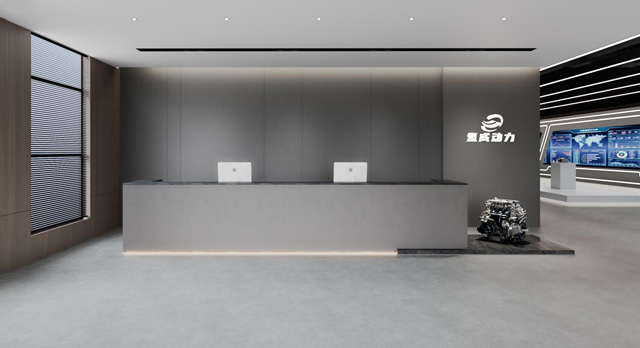
AboutQingcheng Power Technology(Luoyang) Co.,Ltd. is jointly established by Luoyang New Energy Investment and Development Group Co., Ltd., Haizhuo Power (Qingdao) Energy Technology Co., Ltd., Chengdu Yiyi New Energy Automobile Co., Ltd., and Nanjing Hydrogen Maple Technology Partnership (Limited Partnership).
-
ProductsThe company mainly focuses on two major sectors: fuel cell systems, power cells, and energy storage batteries, and is committed to providing leading solutions for hydrogen fuel cell systems and power cell energy storage syste

-
NewsBy giving full play to the advantages of each shareholder to lay the foundation for the sustainable development of the project company, we will develop new product types with more enthusiasm and strong internal management, improve the performance indicators of existing products, and truly let you rest assured.

-
TechnicalThe company's core team has more than 20 years of experience in the field of new energy. It has deep technical reserves in the development of fuel cell systems, engineering services and power storage battery research and development. 1 2 N business system.


News
Committed to providing hydrogen fuel cell systems and power battery energy storage system application solutions
Energy Storage News: Tracking Industry Hotspots!
Release time:
2026-04-27
Source:
On April 22, the CPC Central Committee and the State Council issued the “Opinions on Doing a Better Job in Energy Conservation and Carbon Reduction at a Higher Level and with Higher Quality,” which explicitly states: reasonably control the scale of coal-fired power capacity and generation output; vigorously develop non-fossil energy sources and new forms of energy storage; accelerate the construction of a new-type power system; scientifically plan pumped-storage hydropower projects; innovatively develop business models such as direct green-power supply and smart microgrids; promote the consumption of green electricity; and ensure that newly added clean-energy generation gradually meets the entire society’s incremental electricity demand. At the same time, efforts should be made to improve energy-production efficiency by promoting the adoption of advanced technologies and equipment for the efficient extraction of fossil fuels, strengthening energy-saving and carbon-reduction upgrades as well as flexibility upgrades for coal-fired power plants, rationally determining the dispatch sequence and peak-shaving depth for coal-fired units, continuously enhancing the efficiency of wind and solar power generation and the energy-conversion efficiency of energy-storage systems, and steadily reducing the overall transmission and distribution losses of the power grid.

National Policies and Important News
01 The General Office of the CPC Central Committee and the General Office of the State Council have issued the “Opinions on Doing a Better Job in Energy Conservation and Carbon Reduction at a Higher Level and with Higher Quality.”
On April 22, the CPC Central Committee and the State Council issued the “Opinions on Doing a Better Job in Energy Conservation and Carbon Reduction at a Higher Level and with Higher Quality,” which explicitly states: reasonably control the scale of coal-fired power capacity and generation output; vigorously develop non-fossil energy sources and new forms of energy storage; accelerate the construction of a new-type power system; scientifically plan pumped-storage hydropower projects; innovatively develop business models such as direct green-power supply and smart microgrids; promote the consumption of green electricity; and ensure that newly added clean-energy generation gradually meets the entire society’s incremental electricity demand. At the same time, efforts should be made to improve energy-production efficiency by promoting the use of advanced technologies and equipment for the efficient extraction of fossil fuels, strengthening energy-saving and carbon-reduction upgrades as well as flexibility upgrades for coal-fired power plants, rationally determining the dispatch order and peak-shaving depth for coal-fired units, continuously enhancing the efficiency of wind and solar power generation and the energy-conversion efficiency of energy-storage systems, and steadily reducing the overall transmission and distribution losses of the power grid.
02 The State Council conducted its 19th thematic study session, with the theme “Coordinating energy security with the green and low-carbon transition and accelerating the development of a new energy system.”
On April 20, the State Council held its nineteenth thematic study session, with the theme “Coordinating energy security with the green and low-carbon transition and accelerating the development of a new energy system.” The session was chaired by Premier Li Qiang. Premier Li emphasized the need to continuously enhance the clean and efficient utilization of fossil energy, expedite energy-saving and carbon-reduction upgrades of existing coal-fired power units, and promote a transformation of coal power toward a dual role as both a baseload and system-regulating power source. He also called for accelerating the construction of a new-type power grid by actively exploring new architectures, technologies, and services; increasing investment in optimizing transmission corridor layouts, strengthening backbone network development, building new distribution systems, and improving energy storage and charging infrastructure; leveraging artificial intelligence to drive the digital and intelligent transformation of the power grid; consolidating the grid’s foundational infrastructure; enhancing system coordination and regulation capabilities; and creating a new-type power grid that is safe and reliable, green and low-carbon, robust and resilient, and smart and flexible—thereby better meeting the diversified energy needs of high-quality development.
03 The State Council Information Office held the inaugural press conference in the “Setting the Stage for the 15th Five-Year Plan” series, providing an overview of efforts to promote high-quality economic and social development during the 15th Five-Year Plan period.
On April 17, at a series of thematic press conferences on “Getting Off to a Strong Start in the 15th Five-Year Plan” held by the State Council Information Office, Wang Changlin, Deputy Director of the National Development and Reform Commission, stated that during the 15th Five-Year Plan period, a ten-year initiative to double the share of non-fossil energy will be implemented, and the development of a new energy system will be accelerated. The briefing also emphasized the need to “vigorously advance innovation in energy technology, promote the iterative upgrading of new-energy power-generation technologies, expedite the R&D and application of next-generation coal-fired power technologies and flexible DC transmission for power grids, carry out major R&D efforts on long-duration energy storage, green-electricity-based production of hydrogen, ammonia, and methanol, and controlled nuclear fusion, and foster deep integration between energy-tech innovation and industrial innovation.”
Local Policies and Key News
01 Notice of the Jiangxi Provincial Development and Reform Commission and the Jiangxi Provincial Energy Administration on Issuing the Implementation Plan for Orderly Promoting the Development of Direct Green Electricity Supply in Jiangxi Province
On April 15, the Jiangxi Provincial Development and Reform Commission and the Energy Administration issued the “Implementation Plan for Orderly Promoting the Development of Direct Green Power Supply in Jiangxi Province.” The implementation requirements are as follows: (3) Ensure proper matching between supply and demand. Grid-connected projects shall, in accordance with the principle of “demand-driven supply,” scientifically determine the type and installed capacity of new energy generation sources and, through measures such as energy storage deployment, ensure an appropriate utilization rate. Such projects may adopt a operating model that prioritizes on-site self-generation and self-consumption, with surplus power fed into the grid as a supplementary arrangement. Specifically, the proportion of annual on-site self-generated and self-consumed electricity to total available generation shall be no less than 60%, and the proportion of such electricity to total electricity consumption shall be no less than 30%—rising to no less than 35% by 2030—while the share of grid-supplied electricity to total available generation shall not exceed 20%. (4) Strengthen operational management. Grid enterprises shall provide grid connection services on a fair and non-discriminatory basis to green power direct-supply projects that meet grid-connection requirements, handling relevant connection procedures in accordance with the “Regulations on Fair and Open Grid Access” and taking into account the project type submitted by the applicant. Internal resources of the project must satisfy the “four ‘can’” criteria and, in accordance with the “Grid Operation Guidelines” and other relevant regulations, submit pertinent information to the power dispatching authority. Projects shall comprehensively consider internal supply–demand characteristics, balancing capabilities, economic benefits, and the amount of power exchanged with the public grid, independently and reasonably declare their grid-connection capacity, and negotiate with grid enterprises to determine responsibilities and costs for power supply beyond the declared grid-connection capacity. Green power direct-supply projects must be equipped with separate metering facilities; at key points—including internal generation, plant-use electricity, grid connection, on-site self-generation and self-consumption, and energy storage—two-way metering devices that comply with relevant standards and are approved by the competent authorities shall be installed. Where a plant already has its own coal- or gas-fired captive power plant or other power sources, the electricity generated and the electricity fed into the grid by new renewable energy projects must be accurately metered and separately accounted for. (5) Enhance regulation capability. Project planning documents shall reasonably determine the maximum peak–valley difference ratio of the project’s load, and the peak–valley difference ratio of the power exchanged between the project and the public grid shall not exceed the value specified in the plan. During periods when it is difficult to absorb new energy, projects shall not feed power back into the public grid. Grid-connected direct-supply projects shall, through appropriate energy-storage configuration and by tapping into the flexibility of load response, ensure that the power exchanged with the public grid does not exceed the declared capacity, and shall assume full responsibility for any power-supply interruptions caused by their own actions.
02 The Liaoning Provincial Development and Reform Commission has issued a notice soliciting comments on the “Notice on Establishing a Reliable Capacity Compensation Mechanism on the Generation Side (Draft for Comments)” and its accompanying policies.
Recently, the National Development and Reform Commission of Liaoning Province issued a notice soliciting public comments on the “Notice on Establishing a Reliable Capacity Compensation Mechanism on the Generation Side (Draft for Comments)” (hereinafter referred to as the “Notice”) and its accompanying policy measures, with an initial implementation period of one year. The Notice specifies that the mechanism will officially come into effect on January 1, 2027, for a duration of one year. The scope of implementation for this generation-side reliable capacity compensation mechanism primarily includes: compliant, operating utility coal-fired generating units; grid-side independent new energy storage systems included in the provincial energy authority’s list-based management system; and inter-provincial power purchases (currently limited to power transmission via DC transmission channels). The core formula for calculating compensation fees is as follows: Reliable Capacity Electricity Charge = Reliable Capacity × Capacity Compensation Rate × Capacity Supply-Demand Coefficient − Deductions. For the current year, Liaoning Province has tentatively set the capacity compensation rate at RMB 370 per kilowatt-year (inclusive of tax).
03 The Qinghai Provincial Development and Reform Commission once again publicly solicits comments on the “Draft Measures for Reliability Capacity Compensation on the Generation Side in Qinghai Province”
On April 21, the Qinghai Provincial Development and Reform Commission issued an announcement soliciting public comments once again on the “Draft Measures for Reliable Capacity Compensation on the Generation Side in Qinghai Province,” stating that from 2020 to 2025 the province’s total system capacity requirement will be 20,920 MW, with a total reliable system capacity of 22,788 MW, and that the provincial capacity supply–demand ratio for 2026 will be 0.92. A unified capacity compensation standard will be applied across all types of power sources. In the initial phase, the capacity compensation standard will be based on the “Notice on Establishing a Coal-Fired Power Capacity Compensation Mechanism” (NDRC Price [2023] No. 1501) and aligned with the existing actual compensation standards for coal- and gas-fired units; by 2026, the unified capacity compensation rate will be set at RMB 185 per kilowatt-year. In the later stage, the capacity compensation standard will be determined by calculating the recovery of all or a specified proportion of the marginal unit’s fixed costs, with adjustments made by the provincial pricing authority in light of market conditions and unit construction costs.
04 Notice of the People’s Government of the Ningxia Hui Autonomous Region on Issuing the Outline of the 15th Five-Year Plan for National Economic and Social Development of the Ningxia Hui Autonomous Region
On April 14, the People’s Government of the Ningxia Hui Autonomous Region officially released the Outline of the 15th Five-Year Plan for National Economic and Social Development of the Ningxia Hui Autonomous Region. The document states:
Enhancing the regulation capacity of the power system: advancing the completion and commissioning of the Niushoushan Pumped Storage Power Station, while concurrently promoting pumped storage projects at Niushoushan East, Xikou, Zhongning, Sandaotai, and other sites, and deploying a multi-gigawatt-scale new-type energy storage project in Ningxia.
Expand energy storage technologies and application scenarios: Accelerate the deployment of various new energy storage technologies, strategically plan power-source, grid, and user-side energy storage projects, with a particular focus on deploying grid-forming energy storage facilities at critical grid nodes and promoting the development of public energy storage stations in industrial parks. Proceed in an orderly manner with the construction of a number of pumped-storage hydropower stations to continuously expand the scale of long-duration energy storage. Strive to reduce the minimum generation output of centrally dispatched coal-fired power plants to below 20% by 2030.
Strengthening clean energy equipment manufacturing: prioritizing the development of projects such as energy storage system integration and battery cell production lines, as well as production bases for iron-based flow battery stacks and systems.
Promote efficient interaction among power sources, grids, loads, and storage: tap the potential of demand-side adjustable resources, encourage self-owned power plants, high-energy-consuming loads, interruptible loads, and new types of energy storage to participate in demand response, and accelerate the large-scale development of virtual power plants. Promote integrated source-grid-load-storage models, direct green power supply, and smart microgrids to enhance the local consumption of new energy.
International News
01IEA Releases “Global Energy Review 2026”
On April 20, the International Energy Agency (IEA) released its latest flagship report, the Global Energy Review 2026, which notes that in 2025 all major energy fuels and technologies worldwide recorded growth—albeit at markedly different rates. Slower economic and energy-intensive industrial activity in some regions, declining cooling demand, and accelerating improvements in energy efficiency collectively led to a deceleration in global energy demand to 1.3%, slightly below the average over the past decade. Nevertheless, 2025 saw record new installations of renewable energy capacity, reaching 800 gigawatts, with solar accounting for about 75% of the total. Battery storage emerged as the fastest-growing electricity technology: new installations increased by roughly 40% in 2025, approaching 110 gigawatts—surpassing the highest annual increase in natural-gas-fired power generation on record. In addition, more than 12 gigawatts of nuclear capacity commenced construction globally in 2025.
02 Bloomberg: Data Centers Accelerate Deployment of Energy Storage: AI Fuels New Use Cases
According to the latest report from BloombergNEF, global data-center electricity demand is projected to quadruple over the next decade, reaching roughly 1,500 to 2,000 terawatt-hours (TWh) by 2034. Currently, data centers running artificial-intelligence workloads consume between 400 and 500 TWh of electricity annually. The report highlights that the United States, China, and Europe are the fastest-growing regions in terms of electricity demand, with growth expected to accelerate further after 2026. In the U.S., BloombergNEF added nearly 150 new data-center projects to its tracking database over the past year, with almost one-quarter of these projects boasting individual capacities exceeding 500 megawatts (MW)—more than double the share recorded the previous year. By 2035, U.S. data-center electricity demand is forecast to reach 106 gigawatts (GW), a 36% increase over the agency’s earlier projections based on the same methodology.
Key words:
Previous Page:
Recommended News
Contact
Address: Chanhe Innovation Technology Park, No. 2 Zhenxing Road, Chanhe Hui District, Luoyang City, Henan Province
Tel:0379-63869669
Mailbox:info@hydromobility.cn
Scan

Copyright©2023 Qingcheng Power Technology(Luoyang) Co.,Ltd. This website supports ipv6
 豫公网安备41030402000254号
Copyright©2023 Qingcheng Power Technology(Luoyang) Co.,Ltd.
This website supports ipv6