

-
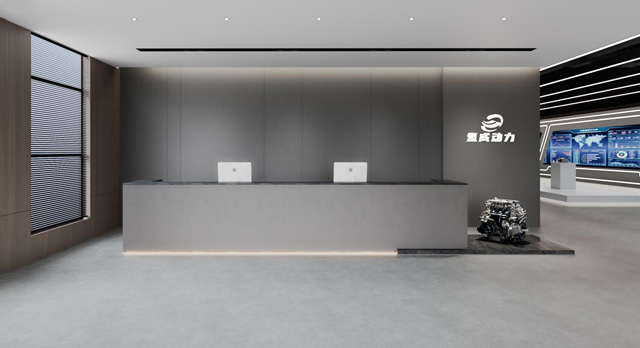
AboutQingcheng Power Technology(Luoyang) Co.,Ltd. is jointly established by Luoyang New Energy Investment and Development Group Co., Ltd., Haizhuo Power (Qingdao) Energy Technology Co., Ltd., Chengdu Yiyi New Energy Automobile Co., Ltd., and Nanjing Hydrogen Maple Technology Partnership (Limited Partnership).
-
ProductsThe company mainly focuses on two major sectors: fuel cell systems, power cells, and energy storage batteries, and is committed to providing leading solutions for hydrogen fuel cell systems and power cell energy storage syste

-
NewsBy giving full play to the advantages of each shareholder to lay the foundation for the sustainable development of the project company, we will develop new product types with more enthusiasm and strong internal management, improve the performance indicators of existing products, and truly let you rest assured.

-
TechnicalThe company's core team has more than 20 years of experience in the field of new energy. It has deep technical reserves in the development of fuel cell systems, engineering services and power storage battery research and development. 1 2 N business system.


News
Committed to providing hydrogen fuel cell systems and power battery energy storage system application solutions
Energy Storage News: Tracking Industry Hotspots!
Release time:
2026-05-11
Source:
On April 28, the Customs Tariff Commission of the State Council issued an announcement on the implementation of zero-tariff measures for African countries that have diplomatic relations with China. The announcement specifies that, from May 1, 2026, to April 30, 2028, zero tariffs will be applied to 20 African countries that have diplomatic ties with China and are not classified as least developed countries. According to the annex, battery materials such as spodumene, natural graphite, lithium hydroxide, lithium carbonates, lithium nickel cobalt manganese oxide, lithium hexafluorophosphate, and battery separators, as well as all-vanadium redox flow batteries and their required vanadium pentoxide raw materials, along with photovoltaic and wind power generation equipment, inverters, transformers, and other related products, are all included in the duty-free list.

National Policies and Important News
On April 28, the Customs Tariff Commission of the State Council issued an announcement on the implementation of zero-tariff measures for African countries that have diplomatic relations with China. The announcement specifies that, from May 1, 2026, to April 30, 2028, zero tariffs will be applied to 20 African countries that have diplomatic ties with China but are not classified as least-developed countries. According to the annex, battery materials such as spodumene, natural graphite, lithium hydroxide, lithium carbonates, lithium nickel cobalt manganese oxide, lithium hexafluorophosphate, and battery separators, as well as all-vanadium redox flow batteries and their required vanadium pentoxide raw materials, along with photovoltaic and wind power generation equipment, inverters, transformers, and other related products, are all included in the duty-free list.
02 The National Energy Administration responds: Integrated and coordinated development of “new energy + energy storage + power grid + market” will enhance the level of computing–power coordination.
In addition, the National Energy Administration has outlined a series of measures to promote the coordinated development of computing and power, including the high-quality formulation and implementation of the 15th Five-Year Plan for building a new-type power system, with “computing–power coordination” designated as a key task for fostering synergistic integration between the power sector and related industries. Furthermore, computing infrastructure will be incorporated into priority areas for ensuring reliable power supply to meet the demand for highly dependable electricity delivery. Efforts will be intensified to advance smart grid development, refine two-way scheduling mechanisms for computing and power, and enhance source–load interaction. Leveraging computing infrastructure, a green-power aggregation and supply model will be developed that enables local power supply from new energy sources, aggregated trading, and on-site consumption, thereby supporting the emergence of new business forms such as direct green-power connections, integrated source–grid–load–storage systems, and smart microgrids. Pilot projects for computing–power coordination will also be launched, with active exploration in areas such as joint forecasting of computing load and new-energy output, flexible control of computing load, and intelligent dispatching, all aimed at elevating the level of computing–power coordination.
Local Policies and Key News
01 The Energy Administration of the Inner Mongolia Autonomous Region has issued the “Notice of the Energy Administration of the Inner Mongolia Autonomous Region on Printing and Distributing the List of the Second Batch of Independent New-Type Energy Storage Construction Projects for 2026.”
Independent energy storage power stations included in this list shall be incorporated into the autonomous region’s planning and shall receive compensation for the amount of electricity they discharge into the public grid. The compensation standards and compensation period shall be implemented in accordance with the relevant requirements of the autonomous region; in the event of any adjustments to national or regional policies, the relevant requirements shall prevail.
02 Policy Interpretation of the Liaoning Provincial Development and Reform Commission’s “Notice on Supporting the Healthy Development of New Energy Storage”
By 2027, the province will have installed over 5 million kilowatts of new-type energy storage capacity, establishing a development framework characterized by rational deployment, technological diversity, a well-functioning market, standardized management, and efficient dispatch, thereby providing robust support for the province’s green and low-carbon energy transition and high-quality economic and social development.
Eligible existing new-energy projects that have already incorporated energy-storage systems may, upon meeting requirements such as independent metering and independent control, transition to standalone energy-storage operations and participate in the electricity market; at the same time, it is explicitly stipulated that grid-connected green-power direct-supply systems and other similar storage facilities cannot be converted into standalone energy-storage entities, thereby clarifying the policy boundaries.
Support the joint operation of new energy sources, coal-fired power plants, and energy storage systems to enhance grid regulation capabilities; encourage the use of decommissioned power plants and existing transmission lines for the deployment of energy storage facilities; explore the development of end-of-grid, remote-area microgrids with integrated energy storage to ensure reliable power supply at the distribution level; support operational cooperation between new-energy power plants and advanced energy-storage projects through medium- and long-term trading and other mechanisms; build distributed energy-storage systems to meet diverse customer demands for power-quality improvement, thereby enhancing supply reliability and optimizing power quality; and support demand-based energy-storage deployment on the user side, in green-power direct-supply projects, and in zero-carbon industrial parks, to improve users’ self-balancing of electricity consumption and reduce the operational and regulatory burden on the bulk power grid.
Establish a reliable capacity compensation mechanism based on system peak contribution; clearly define the user-side electricity price for charging, requiring users to pay transmission and distribution losses as well as system operation costs, with transmission and distribution tariffs temporarily applied on a single-quantity basis; provide corresponding reductions or refunds of transmission and distribution charges for discharging, and streamline the pricing mechanisms and settlement policies for charging and discharging.
03 Notice from the North Hebei Electricity Trading Center on Issuing the “Guidance on Registration Standards for Virtual Power Plants (Aggregators) in the North Hebei Electricity Market”
On May 6, the North Hebei Electricity Trading Center issued the Notice on the Publication of the “Guidance on Registration Standards for Virtual Power Plants (Aggregators) in the North Hebei Electricity Market” (North Hebei Trading [2026] No. 17). The primary resources aggregated by virtual power plants include adjustable industrial and commercial loads, distributed energy resources, advanced energy storage systems, and charging/battery-swapping facilities. Based on the type of aggregated resources, virtual power plants are classified into three categories: load-based, generation-based, and hybrid. Load-based virtual power plants aggregate resources from electricity users with adjustable capabilities; generation-based virtual power plants aggregate distributed generation resources that are not subject to direct dispatch; and hybrid virtual power plants aggregate distributed generation, energy storage, and adjustable load resources that are also not subject to direct dispatch. According to their response timeliness, virtual power plants are further categorized into day-ahead response, intraday response, and direct-control types, which respectively possess day-ahead, hourly, and real-time regulation and response capabilities.
04 The National Energy Administration Issues the “Notice on Organizing and Conducting Information Collection for China–Shanghai Cooperation Organization Power Cooperation Projects”
05 The Chongqing Municipal Commission of Economy and Informatization has released the “Implementation Plan for Electricity Demand Response and Emergency Response in Chongqing (Draft for Comments).”
The price cap benchmark for peak-shaving demand response is RMB 3 per kilowatt-hour, while the price cap benchmark for valley-filling demand response is RMB 0.2 per kilowatt-hour. The maximum price caps for each type of demand response are determined by multiplying the respective price cap benchmarks by the corresponding price cap coefficients.
Eligibility for Demand Response Participation: Within the service area of the grid enterprise, industrial and commercial customers with a 10 kV or higher voltage level that have a separate electricity billing account and the capability and conditions to reduce load during peak periods and increase load during off-peak periods may participate independently or through aggregation via a virtual power plant. Virtual power plant operators must ensure that the aggregated customers they contract meet the aforementioned requirements for demand-response electricity users and comprise no fewer than three customers. The virtual power plant’s peak-shaving/valley-filling response capacity shall be no less than 10,000 kilowatts, with a continuous regulation duration of at least one hour.
Electricity consumers: Single-time demand response subsidy amount = Σ hourly effective response capacity × clearing price
Virtual Power Plant Incentive Subsidies: Monthly incentive subsidy amount = Σ (monthly effective response capacity in hours / Σ monthly awarded response hours) × RMB 5 per kilowatt. Demand-response performance assessment fee = (1 − annual effective response hours / annual awarded response hours) × the participating entity’s annual demand-response subsidy amount. Emergency Response Subsidy Standard for Capacity Reserve: The unit capacity subsidy rate is RMB 15 per kilowatt, with a self-regulation mode coefficient of 1 and a direct procurement–direct control mode coefficient of 2. Regulation Incentive Subsidy: The unit regulation subsidy rate is RMB 4 per kilowatt-hour; the fast-regulation category has a coefficient of 1, while the real-time regulation category has a coefficient of 1.5.
On April 27, 2026, the Hebei Provincial Development and Reform Commission issued the “Notice on Further Strengthening the Standardized Management of Independent Energy Storage Projects.” The notice states that long-duration energy storage applications will be actively supported, and that approved projects—whether planned, under construction, or already in operation—that involve 2-hour independent energy storage systems are encouraged to undertake capacity expansion upgrades, provided that the installed capacity remains unchanged and the necessary conditions for construction or retrofitting are met. Such upgrades will increase the scale of electrical energy storage and extend the duration of full-power discharge during peak periods to more than 4 hours, thereby further enhancing peak-shaving capabilities.
Within nine months of a project’s inclusion in the plan, substantive construction must commence; within fifteen months, the project must be connected to the grid. Individual projects may apply for one extension, not exceeding six months; however, any project that receives an extension will lose its parent entity’s eligibility to submit applications in the following year. Projects that, even after an extension, still fail to commence substantive construction on schedule or are found to lack construction feasibility shall have their construction plans uniformly canceled.
Prior to the completion and commissioning of the project, no changes whatsoever shall be made—whether through intra-group reallocations or the establishment of a first-tier wholly owned subsidiary locally—to the investing entity or the shareholding ratios of the shareholders; any resale of the project is strictly prohibited.
In terms of demonstrating technological advancement, a total of 25 points is awarded; the use of grid-forming inverters and other such approaches is encouraged as they can enhance grid support capabilities. Moreover, the adoption of high-efficiency photovoltaic modules, high-efficiency inverters, or large-capacity, high-efficiency batteries, along with low-noise, highly safe, environmentally friendly advanced equipment and control systems, can effectively reduce the land footprint of the project and improve its techno-economic performance.
Key words:
Previous Page:
Recommended News
Contact
Address: Chanhe Innovation Technology Park, No. 2 Zhenxing Road, Chanhe Hui District, Luoyang City, Henan Province
Tel:0379-63869669
Mailbox:info@hydromobility.cn
Scan

Copyright©2023 Qingcheng Power Technology(Luoyang) Co.,Ltd. This website supports ipv6
 豫公网安备41030402000254号
Copyright©2023 Qingcheng Power Technology(Luoyang) Co.,Ltd.
This website supports ipv6