

-
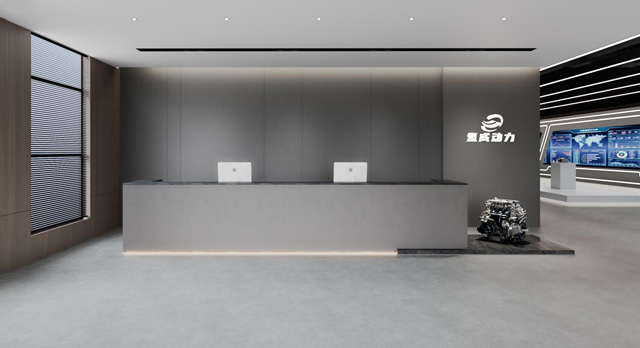
AboutQingcheng Power Technology(Luoyang) Co.,Ltd. is jointly established by Luoyang New Energy Investment and Development Group Co., Ltd., Haizhuo Power (Qingdao) Energy Technology Co., Ltd., Chengdu Yiyi New Energy Automobile Co., Ltd., and Nanjing Hydrogen Maple Technology Partnership (Limited Partnership).
-
ProductsThe company mainly focuses on two major sectors: fuel cell systems, power cells, and energy storage batteries, and is committed to providing leading solutions for hydrogen fuel cell systems and power cell energy storage syste

-
NewsBy giving full play to the advantages of each shareholder to lay the foundation for the sustainable development of the project company, we will develop new product types with more enthusiasm and strong internal management, improve the performance indicators of existing products, and truly let you rest assured.

-
TechnicalThe company's core team has more than 20 years of experience in the field of new energy. It has deep technical reserves in the development of fuel cell systems, engineering services and power storage battery research and development. 1 2 N business system.


News
Committed to providing hydrogen fuel cell systems and power battery energy storage system application solutions
Long-term energy storage demand outbreak of lithium battery mainstream status challenges (I)
Release time:
2023-09-15
Source:
Network
With the development of new energy, the trillion-level energy storage track presents a thriving scene. However, just as the outside world is amazed by the "prosperity" of the energy storage market, companies in the industry are beginning to worry about the upcoming "knockout" of the industry. Under the background of "double carbon", with the continuous advancement of energy transformation, the new energy storage industry has ushered in explosive development opportunities. It is estimated that by 2025, the market size will exceed one trillion yuan.
With the development of new energy, the trillion-level energy storage track presents a thriving scene. However, just as the outside world is amazed by the "prosperity" of the energy storage market, companies in the industry are beginning to worry about the upcoming "knockout" of the industry.
Under the background of "double carbon", with the continuous advancement of energy transformation, the new energy storage industry has ushered in explosive development opportunities. It is estimated that by 2025, the market size will exceed one trillion yuan.
In a number of new energy storage routes, lithium-ion batteries are occupying a "dominant" position. According to data from the National Energy Administration, in 2022, lithium-ion battery energy storage accounted for 94.5 percent of new energy storage installations.
In the face of huge market inertia, almost all new entrant enterprises will take the more mature "lithium battery" technology route as the technology choice when preparing to enter the "energy storage track.
However, the question is whether the new energy storage is really equivalent to the lithium battery route. With the increasingly fierce competition of new energy storage, the "route dispute" is worth more thinking in the industry.
Recently, at the 13th China International Energy Storage Conference held in Hangzhou, Dr. Zheng Hua, associate professor of the School of Electrical and Electronic Engineering of North China Electric Power University, put forward the view that with the increasing demand for power transfer in the power market, the demand for long-term energy storage is ushering in an outbreak.
Some people in the industry believe that this may mean that in the new energy storage field, the market position of the "dominant" lithium battery route is facing challenges.
Recently, Zheng Xiaohao, general manager of liquid storage technology Co., Ltd., said in an interview with the 21st century economic report that at present, although the application of lithium battery as energy storage technology is better in maturity and cost, with the demand for long-term energy storage becoming the mainstream and requiring further extension, the current lithium ion battery energy storage technology is difficult to meet due to its own safety challenges and high expansion costs. Therefore, the long-term energy storage market will be replaced by liquid flow and other routes that are more suitable for long-term energy storage.
Long-term energy storage demand ushered in the outbreak.
What is long-term energy storage? There is no unified standard definition on the market at present.
In 2021, the U.S. Department of Energy's long-term energy storage report mentioned that long-term energy storage is defined as at least 10 hours of continuous operation (discharge) and a service life of 15 to 20 years.
At present, the prevailing definition standard in China is: energy storage technology with continuous transportation (discharge) time of not less than 4 hours is long-term energy storage, 30 minutes to 4 hours is time-to-time energy storage, and shorter is short-term energy storage.
In the process of accelerating the grid connection of new energy, due to the instability of its output, higher requirements are put forward for the consumption capacity of the power grid. In order to better cope with day-to-day fluctuations and balance the energy gap between quarters, long-term energy storage demand has exploded.
Speaking at the Hangzhou Energy Storage Conference, Dr. Zheng Hua made it clear that the national "power cut-off" in 2021 and the power shortage in Sichuan in August 2022 were caused by energy instability. Once the cloudy day without wind lasts for one or two days, the power system in a certain place will be cut off for one or two days.
In order to avoid this phenomenon, all parts of our country have also increased their support for long-term energy storage.
Under the background of "compulsory allocation and storage" of new energy, in February 2023, 27 of China's 31 provinces, municipalities directly under the central government and autonomous regions have issued policies related to new energy allocation and storage, and 18 provinces have made clear the specific installation targets during the 14th Five Year Plan period.
Among them, the policies promulgated by Gansu, Fujian, Hubei, Jilin, Liaoning, Heilongjiang, and Anhui clearly require the peak shaving time of the power supply side to exceed 4 hours. In the future, as the policy advances, it is not ruled out that more provinces will join the ranks of extending the length of energy storage peak adjustment.
These mean that the development of long-term energy storage space is huge.
At present, China's main energy storage demand comes from new energy storage. According to the "2022 Electrochemical Energy Storage Power Station Industry Statistics" published by the CLP on March 29, by the end of 2022, the total energy storage on the power supply side was about 6.80GWh, with a cumulative total of 5.50GWh, accounting for 80.8 percent of all new energy storage power stations. The demand for power-side energy storage from the main energy storage market will stimulate the development of long-term energy storage.
In the global market, McKinsey modeling research shows that by 2040, the long-term energy storage industry may deploy 85-140TW/H of energy storage capacity, and the total electricity consumption of this energy storage may reach 10% of the total global electricity consumption.
Key words:
Long-term energy storage demand outbreak of lithium battery mainstream status is facing challenges
Recommended News
Contact
Address: Chanhe Innovation Technology Park, No. 2 Zhenxing Road, Chanhe Hui District, Luoyang City, Henan Province
Tel:0379-63869669
Mailbox:info@hydromobility.cn
Scan

Copyright©2023 Qingcheng Power Technology(Luoyang) Co.,Ltd. This website supports ipv6
 豫公网安备41030402000254号
Copyright©2023 Qingcheng Power Technology(Luoyang) Co.,Ltd.
This website supports ipv6