

-
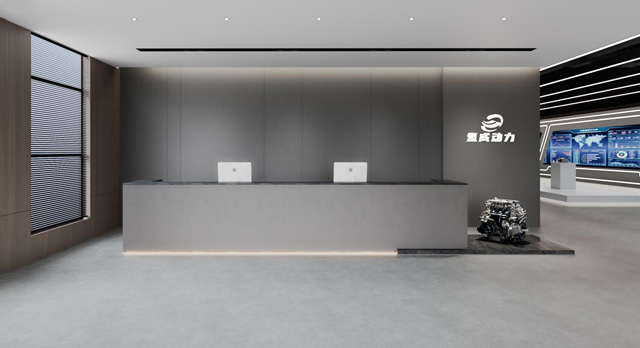
AboutQingcheng Power Technology(Luoyang) Co.,Ltd. is jointly established by Luoyang New Energy Investment and Development Group Co., Ltd., Haizhuo Power (Qingdao) Energy Technology Co., Ltd., Chengdu Yiyi New Energy Automobile Co., Ltd., and Nanjing Hydrogen Maple Technology Partnership (Limited Partnership).
-
ProductsThe company mainly focuses on two major sectors: fuel cell systems, power cells, and energy storage batteries, and is committed to providing leading solutions for hydrogen fuel cell systems and power cell energy storage syste

-
NewsBy giving full play to the advantages of each shareholder to lay the foundation for the sustainable development of the project company, we will develop new product types with more enthusiasm and strong internal management, improve the performance indicators of existing products, and truly let you rest assured.

-
TechnicalThe company's core team has more than 20 years of experience in the field of new energy. It has deep technical reserves in the development of fuel cell systems, engineering services and power storage battery research and development. 1 2 N business system.


News
Committed to providing hydrogen fuel cell systems and power battery energy storage system application solutions
Long-term energy storage demand outbreak lithium battery mainstream status challenges (II)
Release time:
2023-09-15
Source:
Network
However, under the huge demand for long-term energy storage, the lithium battery energy storage route, which is now the mainstream energy storage route, may face challenges in its "dominant" market position. On May 29, Zheng Xiaohao told the 21st Century Business Herald reporter that with the increasing demand for long-term storage, although the lithium battery route still has huge economic advantages at the moment, in the long run, its dominant position may be more suitable for long-term storage such as liquid flow. The technical route replaces. The liquid flow energy storage technology co., ltd. where he works is currently a domestic energy storage company that adopts the dual technical routes of all-vanadium flow battery and iron-chromium flow battery.
Lithium battery's "dominant" status is challenged
However, under the huge demand for long-term energy storage, the lithium battery energy storage route, which is now the mainstream energy storage route, may face challenges in its "dominant" market position.
On May 29, Zheng Xiaohao told the 21st Century Business Herald reporter that with the increasing demand for long-term storage, although the lithium battery route still has huge economic advantages at the moment, in the long run, its dominant position may be more suitable for long-term storage such as liquid flow. The technical route replaces.
The liquid flow energy storage technology co., ltd. where he works is currently a domestic energy storage company that adopts the dual technical routes of all-vanadium flow battery and iron-chromium flow battery.
He further said, "If the power grid needs to be configured with an energy storage type that responds within one second, but the charge and discharge time is about 30 minutes, lithium is more appropriate, but if a longer one is configured, the flow may be more appropriate."
Zheng Xiaohao explains the above conclusions from both security and economic perspectives.
First of all, in terms of safety, Zheng Xiaohao believes that the characteristics of lithium batteries as combustibles determine that their safety problems cannot be completely solved, and this problem will become more prominent under the long-term energy storage requirements.
He made it clear, "Lithium-ion batteries are made out of combustibles, which means that no matter how well the BMS (battery management system) is done, how powerful the liquid or air cooling system is done, and how accurate the current control system is. But the lithium-ion battery as a combustible is unavoidable, and any minor quality problems or improper operation can lead to a fire and explosion of the cell."
Zheng Xiaohao said that the flow battery does not have this problem. He pointed out that "the electrolyte of the flow battery is made of water. Even if the positive and negative electrodes are mixed together, it will not catch fire."
In fact, the frequent safety accidents of lithium batteries have also hindered the application of lithium batteries to a certain extent.
On June 1, a new energy storage investment and financing seminar held in Beijing, Yang Yusheng, an academician of the Chinese Academy of Engineering, pointed out: "South Korea, the United States, Australia lithium-ion batteries have repeatedly caught fire and exploded. For example, on October 15, 2022, the battery of an important data center in South Korea caught fire and cut off power, resulting in two major Internet service interruptions, 32000 servers paralyzed, and financial transportation severely damaged."
The disadvantages of lithium-ion batteries as long-term energy storage also include the problem of high expansion costs.
Zheng Xiaohao explained that lithium-ion batteries provide power and energy storage devices are bound together. Without increasing power, only increasing capacity, the battery cost will increase in proportion. That is, the battery cost of the 4-hour energy storage system is 4 times that of the 1-hour energy storage system. In comparison, other routes such as liquid flow may be more cost-effective.
In contrast, if the flow battery improves the battery life, the cost is much lower than that of the lithium-ion battery.
"The charging and discharging time of the liquid flow power station can theoretically be infinitely long. What we need to do is to provide a relatively large cylinder that can store electrolyte to store enough current. The future power grid requires the liquid flow battery to store electricity for one to two days. It can also be realized, but it is nothing more than a larger cylinder." Zheng Xiaohao said.
Call for more new technologies
In addition, resource issues have also become one of the constraints on the development of long-term energy storage for lithium batteries.
Public information shows that the total distribution of lithium resources is limited, and the crustal abundance is only 0.006 percent. Even if it were all mined, it would only be enough to meet the 100 demand for TWh.
McKinsey modeling research shows that by 2040, the global long-term energy storage industry may deploy 85-140TWH (terawatt hour) of energy storage capacity.
In contrast, the vanadium flow route in the flow battery route also has a huge resource reserve gap. According to Zheng Xiaohao, the world's vanadium resources are not enough for 50 TWh of capacity.
Zheng Xiaohao pointed out that the market will look for more technical routes for other resources. From lithium-ion batteries to sodium-ion batteries, vanadium flow flow batteries to zinc-iron/iron-chromium technology routes, or become the technology of the energy storage market.
Academician Yang Yusheng advocated that while the energy storage market is steadily developing the demonstration scale of lithium-ion batteries, it is also necessary to step up support for the flow battery technology route represented by iron and chromium.
Key words:
Long-term energy storage demand outbreak of lithium battery mainstream status is facing challenges
Recommended News
Contact
Address: Chanhe Innovation Technology Park, No. 2 Zhenxing Road, Chanhe Hui District, Luoyang City, Henan Province
Tel:0379-63869669
Mailbox:info@hydromobility.cn
Scan

Copyright©2023 Qingcheng Power Technology(Luoyang) Co.,Ltd. This website supports ipv6
 豫公网安备41030402000254号
Copyright©2023 Qingcheng Power Technology(Luoyang) Co.,Ltd.
This website supports ipv6